CartanMod
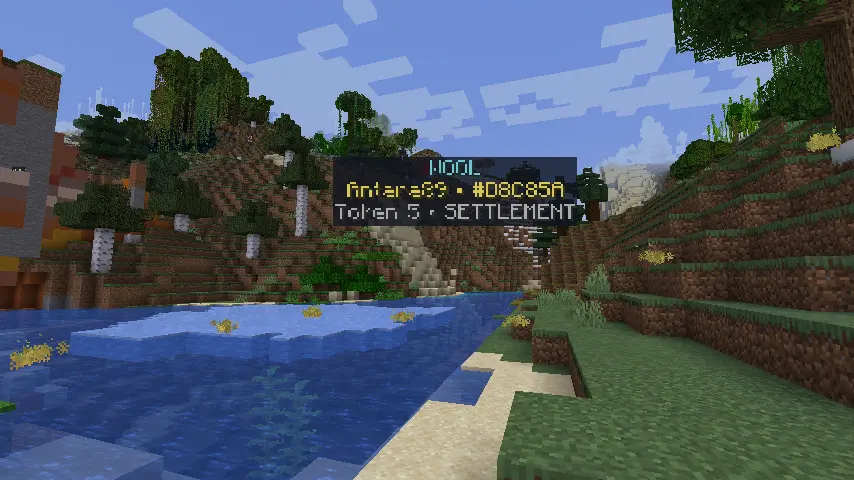
将整个 Minecraft 世界转变为一个生动、持久且受卡坦岛启发的策略游戏。
CartanMod 将主世界变成一个多人棋盘,其中每个 16×16 的生物群系区块都是一块资源地块。探索这片景观,选择一种颜色,建立定居点,掷骰子获取产量,交易资源,将城市扩张为首都,建造伟大工程,组建团队,完成合约,并争夺王冠——同时继续在正常的 Minecraft 世界中建设和冒险。
CartanMod 不再是在桌面上放置一个小棋盘,而是直接使用世界本身。森林成为木材来源,干旱生物群系产出砖块,湿润生物群系产出羊毛,平原和草地提供谷物,高地或多石地形则产出矿石。每个地块都会获得一个产量标记,被占用的区块会以拥有者的颜色勾勒轮廓,而定居点、城市、港口以及强盗都将成为一个可以随着社区意愿无限扩展的棋盘的一部分。
CartanMod 既适合作为专注的游戏之夜活动,也适合用作长期运行的生存服务器元游戏,或大型社区的土地与经济系统。游戏存档与世界绑定,新玩家可以在游戏开始后加入,且没有强制的分数上限——世界会一直持续下去,直到管理员决定是时候开启新的棋盘为止。
亮点
- 直接基于 Minecraft 的生物群系区块进行的卡坦岛风格经济玩法
- 带有定居点、专业化城市、移动前哨站、产量标记和可见边界的彩色区块占领机制
- 基于回合制的掷骰子、建造、银行、港口、强盗和资源生产
- 能够存活于服务器重启的持久化游戏
- 首都和五个阶段的伟大工程,让后期发展变得有意义
- 精美的内置面板,包含大厅、建造、帝国、卡牌、资源、规则和局部地图控制功能
- 个人合约、高风险的商人合约以及十二种不同的议会行动卡牌
- 团队功能:共享建造权限、选举产生的领袖、帝国名称、金库和公共工程
- 可选的物理资源物品、安全的个人保险箱、货物配送、追踪和突袭机制
- 受保护的领地,支持可配置的建造、挖矿、PvP、火灾和爆炸规则
- 支持中途加入,最多容纳 1,000 名就座玩家
- 针对长期运行或非同步服务器的可配置定时产量
- 丰富的命令系统,并提供便捷的短别名
/ctn
世界如何变成棋盘
CartanMod 使用 ChunkBiomes(区块生物群系),确保每个区块都有一个明确的生物群系身份。该生物群系决定了该地块所代表的资源:
| 地形 |
CartanMod 资源 |
| 森林生物群系 |
木材 (Wood) |
| 干旱生物群系 |
砖块 (Brick) |
| 湿润生物群系 |
羊毛 (Wool) |
| 平原和草地 |
谷物 (Grain) |
| 高地和多石生物群系 |
矿石 (Ore) |
产量标记会被分配给地块,就像桌面棋盘上的数字空格一样。当玩家掷骰子时,所有位于匹配数字上的定居点各产出一份资源,而每座城市产出两份。掷出七点则会激活强盗:将其放置在已被占用的地块上以阻止生产,并在允许的情况下从该地块拥有者处窃取一份资源。
海洋、河流、海滩和沼泽区域也可能包含确定性的港口。建立一个港口可以改善你的银行交易条件。商人港口提供任意资源 3:1 的交易比例,而专业港口则提供其特定命名资源 2:1 的交易比例。港口的位置源自世界本身,因此它们在重启后保持稳定。
定居、扩张与专业化
每位玩家开始时需选择一种独特的颜色。六种常见的命名颜色可供选择,但玩家也可以输入精确的十六进制颜色代码,或者让 CartanMod 自动生成一种独特的颜色。在首个回合中,每位玩家放置两个免费的初始定居点。第二个定居点会赠送一组包含木材、砖块、羊毛和谷物的起始物资包,以便立即开始扩张。
建立之后,新的定居点必须与你已控制的土地接壤,并且需要消耗一份木材、一份砖块、一份羊毛和一份谷物。每个普通定居点可以获得一种永久专业化:城市加倍产量并增加一顶王冠;贸易驿站改善银行汇率;堡垒抵御强盗和破坏者;公会大厅提供购买议会卡牌的功能。这些专业化互斥,因此经济增长、防御和卡牌访问权仍然是有意义的抉择。
一个定居点价值一顶王冠,一座城市价值两顶,而一座首都价值三顶。完成的伟大工程也会授予声望王冠。王冠提供了一种清晰且无限制的进度衡量标准,而无需迫使服务器在某个任意分数处结束。实时侧边栏会显示当前活跃玩家、当前阶段、已占用地块数量、强盗位置、跳过回合数以及领先排名,同时不会泄露任何人的私人资源手牌。
主世界的出生区块始终保持为中立庇护区,永远无法被占领。玩家的第一个定居点也将成为其个人的重生点。
每位玩家还可以在一个遥远的未占领区块部署一个移动商队前哨站。它需要消耗木材和砖块,经过延迟后激活,并具有重新部署冷却时间。该前哨站可以保护远程建筑免受火灾和爆炸影响,但不会产生资源、不授予王冠或港口优惠、不延伸定居点的相邻关系,也不提供 PvP 和突袭免疫。
首都与后期游戏
一个发展成熟的城市可以成为玩家的首都。该城市必须位于一个相连集群的核心位置,拥有三个直接相邻的己方占领地块,并且至少包含三种不同的定居点专业化。玩家通过达到商人等级 2 或完成三个个人合约来获得资格,因此无论使用物理资源经济还是默认的虚拟资源模式,首都都可以解锁。
建立首都是一项重大的投资,需要消耗木材、砖块、羊毛、谷物和矿石。作为回报,它的双倍产出能力得以保留,其议事厅(Council chamber)成为现实,价值三顶皇冠,并解锁帝国时代:五项持久的、分为三个阶段的大型工程(Great Projects)。同一时间只能有一项处于建设中,且每个阶段都需要在项目的锚点处贡献新的资源包。
| 大型工程 |
起始地点 |
永久奖励 |
| 大集市 (Grand Market) |
贸易站 (Trading Post) |
将原本较差的一项银行交易改善为每回合 2:1。 |
| 城堡 (Citadel) |
连接良好的堡垒 (Fortress) |
保护城堡及其直接相邻的已拥有领地免受强盗和破坏者(Saboteur)侵害。 |
| 大学 (University) |
公会大厅 (Guild Hall),在完成契约(Contracts)并获得一张议会卡牌后 |
允许玩家选择未来个人契约的类型。 |
| 纪念碑 (Monument) |
城市或首都 |
授予两顶声望皇冠。 |
| 港口网络 (Harbor Network) |
由已拥有的港口或贸易站支持的首都 |
重定向一次实体资源的商人契约。 |
除纪念碑外,每项工程完成后都会授予一顶声望皇冠。活跃阶段、已完成项目、锚点、奖励和声望在重启后依然保留。悬浮的领土标签显示建设进度和已建成地标,而本地地图则区分城市、首都、活跃建设中和已完成的大型工程。
Minecraft 中重要的领土主张
被主张的方块不仅仅是地图上的彩色区域:它们是受保护的 Minecraft 世界部分。
默认情况下,只有所有者可以在领土内建造、破坏或与方块交互。当任何一方玩家位于受保护领地内时,PvP 将被禁用;火焰无法在此燃烧或蔓延;爆炸也无法损坏被主张的方块。所有者可以在特定领土中永久信任个别玩家,而队友会自动获得彼此领地内的共享建造和交互权限。外交家(Diplomat)议会卡牌也可以提供临时的访客访问权限。
每个被主张的方块都会收到一个悬浮标签,显示其资源、所有者、产出数量、定居点专业化以及任何活跃或已完成的大型工程。玩家还可以选择显示附近未被占据区块的标签。为了更清晰的战略概览,游戏内地图提供了一个权威的 11×11 区块视图,包含资源颜色、领土边界、城市、首都、工程项目地标、专业化、港口以及强盗。
希望实行更严格土地规则的服务端可以为所有普通玩家启用挖矿限制。运营商保留管理绕过权限,下界和末地的建造不受限制,且可通过可配置的方块白名单豁免通用资源(如雪或潜影贝/幽匿等,此处指 snow or sculk)。
贸易与经济选择
资源是私有的,普通的银行交易从四张同类型卡牌换取一张其他类型卡牌开始。被主张的港口、议会卡牌、贸易协定、禁运和团队公共工程都可以改变可用汇率或在单回合内重塑市场。
默认的资源系统使用私有虚拟余额,保持体验简洁流畅,防止卡牌堆积在普通物品栏中。玩家可以在面板中查看自己的手牌,或使用 /cartan resources 命令。
为了获得更真实的生存体验,服务端所有者可以启用真实的资源物品。木材、砖块、羊毛、谷物和矿石将作为自定义 CartanMod 物品存在,可以被携带、转移、交付、追踪或劫掠。玩家还会获得一个持久的私人 CartanMod 保险库,配有命令和可选的自动存款模式,以便安全地管理资源。
资源存储限制是可配置的。在安全默认设置下,普通的 CartanMod 资源不能简单地隐藏在末影箱、潜影盒、漏斗或其他存储系统中。这确保了经济系统的可执行性,并防止自动化绕过预期的风险。满库存时使用正常的掉落物品行为,而玩家在离线期间获得的资源将在其返回时排队交付。
契约与商人进阶
个人契约增加了超越扩张的持久目标。接受一项契约并朝着多个目标之一努力,例如占领普通方块、建造城市、接收骰子产出的资源、完成银行交易或为团队公共工程做出贡献。完成契约会奖励一张随机的议会卡牌,所有进度在重启后保留。完成大学大型工程后,其所有者可以选择未来的契约类型,而不是依赖随机抽取。
当启用真实资源时,商人契约创造了第二种风险更高的活动。接受公共交付任务,将所需的散货绑定为契约货物,并在截止日期前将其运送到遥远的中立区块。路线是公开宣布的,提供的商人路标罗盘指向目的地,其他玩家可能能够在货物暴露期间追踪承运人。
货物不能用普通资源替换、转交给其他玩家,也不能隐藏在保险库、箱子、漏斗、潜影盒或末影箱中。成功的交付会推进个人的三级商人职业。较高等级可以要求更大的货物负载和更长的旅程,同时提供包含资源、议会卡牌或皇冠的改进奖励表。阈值、路线长度、截止日期、货物乘数和加权奖励均由服务端所有者配置。
商人进度还提供了一条通往末地的可配置路径。默认情况下,/cartan travel end 需要三顶皇冠和商人等级 2,且不消耗任一要求。
议会行动卡牌
一旦你拥有了一座城市、首都或公会大厅,并且已经掷骰决定当前回合,你可以花费一单位矿石、一单位羊毛和一单位谷物购买一张随机的议会卡牌。每个议事厅每回合可以资助一次购买,但每名玩家在该回合只能打出一张卡牌。
这十二张卡牌引入了战术决策,但不会取代核心经济体系:
| 议会卡牌 |
效果 |
| Surveyor |
揭示周围 3×3 区块内的资源和生产标记。 |
| Pioneer |
减少你本回合下一个普通定居点的建造成本。 |
| Harvest Festival |
立即从你所在的区块产出资源。 |
| Merchant Charter |
将你本回合的银行交易比例提升至 3:1。 |
| Road Convoy |
在木料和砖块的基础上占领一个相邻的未归属区块。 |
| Saboteur |
在不偷窃的情况下,将强盗移动到堡垒或城堡保护范围之外的已归属领土。 |
| Trade Pact |
给予另一位就座玩家 2:1 的银行交易权限。 |
| Embargo |
阻止涉及指定资源的银行交易,直到你的下一回合。 |
| Fortify |
允许你的一块地块在强盗活动期间继续生产。 |
| Public Works |
推进团队项目,使其获得永久性的 3:1 银行交易权限。 |
| Diplomat |
暂时授予另一名玩家对你所属区域的建造和交互权限。 |
| Election Campaign |
在选举进行中时,为队友增加一张额外的选票。 |
卡牌保持私密且持久存在。你可以随时通过指令查看和使用这些卡牌,而面板则提供了针对常见位置相关操作的快捷控制。
队伍、帝国与选举
玩家可以保持独立,也可以组织成持久的队伍。加入现有队伍会生成一个请求,必须由该队伍的民选领袖或操作员批准。队友保留各自的个人颜色和领地主张,但他们可以在整个队伍领土范围内建造和交互;他们的领地主张、首都(Capital)和大工程(Great Project)皇冠将合并计入队伍总分。
队伍包含以下特性:
- 由玩家投票选出的领袖,支持处理平票情况
- 在每个队伍地块上显示的自定义帝国名称
- 持久共享的资源金库
- 由领袖控制的提款功能,确保共享支出的可追溯性
- 全队范围的公共工程进度推进
- 加入请求、审批、拒绝以及保存的成员名单
任何成员都可以发起选举。当所有人都投票后,选举自动完成;或者可以提前关闭以结算已投出的选票。议会卡牌甚至可以影响正在进行的竞选活动。
探索、追踪与突袭
CartanMod 鼓励玩家在受保护定居点之间的空间中移动。
可制作的追踪罗盘(Tracker Compass)指向同一维度中距离最近的一名在线玩家,前提是该玩家位于所有已归属区块之外并携带 CartanMod 资源。手持该物品时指针会实时更新,右键点击可刷新。
在物理物品模式下,可制作的掠夺钩(Raid Hook)会将上述信息转化为高风险遭遇战。在不受保护的领土中对其他玩家使用该物品,可以从其背包、鼠标悬停栏以及嵌套的原版容器物品中夺取散落的 CartanMod 资源堆。突袭在已归属领土内以及在队友之间会被阻止;不会触碰受保护的金库余额;成功掠夺后会有冷却时间。提供集成 API,以便兼容的背包或饰品模组将其额外库存暴露给相同的突袭规则。
专为小团体和大型社区设计
CartanMod 支持最多 1,000 名就座玩家。自动配色使用分离的黄金角度色相,邻近边界效果具备区域感知能力,生产和所有权查找采用索引优化,侧边栏则将排名浓缩为易读的排行榜。
新玩家可以加入正在进行的游戏而不会中断当前回合。他们会被添加到回合顺序的末尾,并在他们的第一回合到来时获得同样的两个初始定居点建立阶段。
如果某名玩家卡住或断开连接,在线参与者可以投票跳过当前回合。默认情况下需要严格多数票,操作员可以直接跳过,服务器还可以选择让普通玩家免投票直接跳过。即使跳过,也会先正确结算生产,然后再轮到下一位玩家。
对于传统逐回合生产节奏过慢的持久化服务器,定时生产可以按照可配置的间隔全局滚动进行。玩家仍保留正常的建造和交易回合,而共享计时器会将资源发放给符合条件的定居点——即使在异步游戏期间也是如此。离线生产拥有自己可配置的宽限期,以防止断开的玩家无限积累财富。
游戏内界面
按 C 打开 CartanMod 面板。它将游戏的核心部分集中在一个地方:
- 加入、颜色选择和游戏开始控制
- 回合行动、建造、银行交易和强盗控制
- 用于建立首都和管理大工程的“帝国”标签页
- 私人资源及 CartanMod 金库读数
- 当前合同和私人议会卡牌
- 地块、港口和玩家信息
- 交互式本地世界地图
- 紧凑的规则参考
Minecraft 的“控制”菜单中包含了用于 Roll CartanMod Dice 和 End CartanMod Turn 的可选按键绑定,默认未绑定。服务器响应也保留在聊天窗口中,因此专注于命令的玩家可以不依赖面板而使用整个游戏。
同时支持 /cartan 和更短的 /ctn 命令根目录。输入 /cartan help 可查看完整的游戏内命令列表。
快速入门
- 在服务器和参与客户端上安装 CartanMod 及其所需的依赖项。
- 加入世界并按 C,或使用
/cartan join <color> 选择颜色。
- 让操作员或服务器控制台运行
/cartan start。
- 在你的第一回合,使用
/cartan claim 放置两个免费的初始定居点。
- 在后续回合中,使用
/cartan roll,进行建造或交易,最后用 /cartan end 结束回合。
- 通过面板中的 Build 和 Empire 标签页,发展专业化定居点,建立首都,并建造大工程。
- 在探索更广泛的系统时,使用
/cartan map、/cartan harbor、/cartan cards、/cartan contracts 和 /cartan help。
操作者指令 /cartan reset 会刻意清除已保存的棋盘并开始一局新游戏。普通的服务器重启不会重置进度。
持久化与配置
CartanMod 将棋盘数据保存在主世界(Overworld)的常规存档中。玩家在重启后可以恢复:玩家、颜色、资源手牌、领地主张、定居点专长、首都、活跃大工程阶段、工程锚点与奖励、声望皇冠、回合状态、建国进度、匪徒位置、议会卡牌、契约、商人进度、队伍、选举、国库、公共工程、权限以及临时效果。当世界加载完成后,实时侧边栏也会自动返回。
服务器管理员可以在 config/cartanmod.properties 中自定义体验。主要选项包括:
- 虚拟或实体资源物品
- 资源存储限制与保险库自动行为
- 挖矿限制及全局可破坏方块覆盖设置
- 首次加入和乘坐玩家时的游戏模式
- 定时生产间隔与信息可见性
- 离线生产的宽限时间
- 玩家跳过回合的权限
- 商人货物、距离、截止日期、进度与奖励
- 末地旅行的皇冠与商人等级要求
请在服务器停止运行时更改配置。更改涉及资源模型的选项应在不同游戏之间进行,并随后执行一次刻意的棋盘重置。
前置需求
- Minecraft: Java Edition 1.21.1
- Java 21 或更高版本
- Fabric Loader 0.18.4 或更高版本
- Fabric API
- ChunkBiomes (
chunkbiomes-1.0.0.jar)
请将 CartanMod 与 Fabric API 和 ChunkBiomes 一同安装。对于多人游戏,请确保服务器和参与客户端使用匹配的模组版本。
CartanMod 是一个独立的、灵感源自《卡坦岛》(Catan)的 Minecraft 项目。它专为喜欢建设定居点、谈判交易、领土战略、冒险旅程以及一个在第一次掷骰子后仍持续讲述其故事的社区的爱好者设计。
CartanMod
Turn an entire Minecraft world into a living, persistent, Catan-inspired strategy game.
CartanMod transforms the Overworld into a multiplayer board where every 16×16 biome chunk is a resource tile. Explore the landscape, choose a colour, establish settlements, roll for production, trade resources, grow cities into Capitals, construct Great Projects, form teams, complete contracts, and compete for crowns—all while continuing to build and adventure in a normal Minecraft world.
Instead of placing a small board on a table, CartanMod uses the world itself. Forests become sources of wood, dry biomes produce brick, wet biomes produce wool, plains and meadows provide grain, and high or stony terrain yields ore. Every tile receives a production token, claimed chunks are outlined in their owner's colour, and settlements, cities, harbors, and the bandit all become part of a board that can stretch as far as your community wants to take it.
CartanMod works equally well as a focused game night, a long-running survival-server metagame, or a large community land-and-economy system. Games are saved with the world, new players can join after a game has begun, and there is no forced score limit—the world continues until an operator decides it is time for a new board.
Highlights
- A Catan-inspired economy played directly across Minecraft's biome chunks
- Coloured chunk claiming with settlements, specialized cities, mobile outposts, production tokens, and visible borders
- Turn-based rolling, building, banking, harbors, the bandit, and resource production
- Persistent games that survive server restarts
- Capitals and five staged Great Projects that make late-game development matter
- A polished in-game panel with lobby, building, Empire, cards, resources, rules, and local-map controls
- Personal Contracts, risky Merchant Contracts, and twelve different Council action cards
- Teams with shared building access, elected leaders, empire names, treasuries, and public works
- Optional physical resource items, secure personal vaults, cargo delivery, tracking, and raiding
- Protected claims with configurable building, mining, PvP, fire, and explosion rules
- Support for late joining and as many as 1,000 seated players
- Configurable timed production for long-running or asynchronous servers
- Extensive commands with the short
/ctn alias for convenience
How the world becomes the board
CartanMod uses ChunkBiomes so that every chunk has one clear biome identity. That biome determines the resource represented by the tile:
| Terrain |
CartanMod resource |
| Forested biomes |
Wood |
| Dry biomes |
Brick |
| Wet biomes |
Wool |
| Plains and meadows |
Grain |
| High and stony biomes |
Ore |
Production tokens are assigned to tiles, just like numbered spaces on a tabletop board. When a player rolls, every settlement on the matching number produces one resource and every city produces two. A roll of seven activates the bandit instead: place it on a claimed tile to block production and, when allowed, steal a resource from its owner.
Ocean, river, beach, and swamp areas may also contain deterministic harbors. Settle one to improve your bank trades. Merchant Harbors offer 3:1 trading for any resource, while specialist harbors offer 2:1 trading for their named resource. Harbor locations are derived from the world itself, so they remain stable across restarts.
Settle, expand, and specialize
Each player begins by choosing a unique colour. Six familiar named colours are available, but players can also enter an exact hex colour or let CartanMod generate a distinct automatic colour. On their first turn, every player places two free founding settlements. The second settlement grants a starter bundle of wood, brick, wool, and grain so expansion can begin immediately.
After founding, a new settlement must touch land you already control and costs one wood, one brick, one wool, and one grain. Each ordinary settlement can take one permanent specialization: cities double production and add a crown, Trading Posts improve bank rates, Fortresses repel the bandit and Saboteur, and Guild Halls provide Council-card purchases. Specializations are mutually exclusive, so economic growth, defense, and card access remain meaningful choices.
A settlement is worth one crown, a city is worth two, and a Capital is worth three. Completed Great Projects also grant prestige crowns. Crowns provide a clear, unlimited measure of progress without forcing the server to end at an arbitrary score. The live sidebar keeps the active player, current phase, claimed-tile count, bandit position, turn skips, and leading standings visible without revealing anyone's private resource hand.
The Overworld spawn chunk remains a neutral sanctuary and can never be claimed. A player's first settlement also becomes their personal respawn point.
Each player can also deploy one mobile Caravan Outpost in a distant unclaimed chunk. It costs wood and brick, activates after a delay, and has a relocation cooldown. The outpost protects a remote build from fire and explosions without producing resources, granting crowns or harbor rates, extending settlement adjacency, or creating PvP and raid immunity.
Capitals and the late game
A developed City can become a player's one Capital. The City must sit at the heart of a connected cluster with three directly adjacent owned claims and at least three distinct settlement specializations. Players qualify through Merchant Level 2 or by completing three personal Contracts, so Capitals remain available with either the physical-resource economy or the default virtual-resource mode.
Establishing a Capital is a major investment of wood, brick, wool, grain, and ore. In return, it retains double production and its Council chamber, becomes worth three crowns, and unlocks the Era of Empires: five persistent, three-stage Great Projects. Only one may be under construction at a time, and every stage requires a new bundle of resources contributed at the project's anchor.
| Great Project |
Where it begins |
Permanent reward |
| Grand Market |
Trading Post |
Improves one otherwise-worse bank trade to 2:1 each turn. |
| Citadel |
A well-connected Fortress |
Protects the Citadel and directly adjacent owned territory from the bandit and Saboteur. |
| University |
Guild Hall after completing Contracts and acquiring a Council card |
Lets the player choose the type of each future personal Contract. |
| Monument |
City or Capital |
Awards two prestige crowns. |
| Harbor Network |
Capital supported by owned harbors or Trading Posts |
Reroutes each physical-resource Merchant Contract once. |
Every project other than the Monument grants one prestige crown on completion. Active stages, completed projects, anchors, rewards, and prestige persist through restarts. Floating claim labels show construction progress and completed landmarks, while the local map distinguishes Cities, Capitals, active construction, and completed Great Projects.
Claims that matter in normal Minecraft
Claimed tiles are more than coloured spaces on a map: they are protected parts of the Minecraft world.
By default, only the owner can build, break, or interact with blocks in a claim. PvP is disabled when either player is inside protected territory, fire cannot burn or spread there, and explosions cannot damage claimed blocks. Owners can permanently trust individual players in a specific claim, while teammates automatically receive shared building and interaction access across one another's territory. A Diplomat Council card can also grant temporary guest access.
Each claimed tile receives a floating label showing its resource, owner, production number, settlement specialization, and any active or completed Great Project. Players can optionally show nearby labels for unclaimed chunks as well. For a cleaner strategic overview, the in-game map presents an authoritative 11×11-chunk view with resource colours, claim borders, Cities, Capitals, project landmarks, specializations, harbors, and the bandit.
Servers that want a stricter land game can enable mining restrictions for all regular players. Operators keep an administrative bypass, Nether and End building remains unrestricted, and a configurable block allowlist makes it possible to exempt universal resources such as snow or sculk.
Trading and economic choices
Resources are private, and ordinary bank trades begin at four matching cards for one card of another type. Claimed harbors, Council cards, trade pacts, embargoes, and team public works can all change the available rates or reshape the market for a turn.
The default resource system uses private virtual balances, keeping the experience streamlined and preventing cards from cluttering normal inventories. Players can check their hand in the panel or with /cartan resources.
For a more physical survival experience, server owners can enable real resource items. Wood, brick, wool, grain, and ore then exist as custom CartanMod items that can be carried, transferred, delivered, tracked, or raided. Players also receive a persistent private CartanMod vault, with commands and an optional automatic-deposit mode for managing their resources safely.
Resource storage restrictions are configurable. With the secure defaults, ordinary CartanMod resources cannot simply be hidden in Ender Chests, shulker boxes, hoppers, or other storage systems. This keeps the economy enforceable and prevents automation from bypassing the intended risk. Full inventories use normal dropped-item behaviour, and resources earned while a player is offline are queued for delivery when they return.
Contracts and merchant progression
Personal Contracts add persistent goals beyond expansion. Accept a Contract and work toward one of several objectives, such as settling normal tiles, constructing a city, receiving dice-produced resources, completing bank trades, or contributing to team Public Works. Finishing a Contract awards a random Council card, and all progress survives restarts. Completing a University Great Project lets its owner select future Contract types instead of relying on a random draw.
When physical resources are enabled, Merchant Contracts create a second, much riskier activity. Accept a public delivery, bind the required loose resources as contract cargo, and carry them to a distant neutral chunk before the deadline. The route is publicly announced, the supplied Merchant Route Compass points toward the destination, and other players may be able to track the carrier while the cargo is exposed.
Cargo cannot be replaced with ordinary resources, passed to another player, or hidden in a vault, chest, hopper, shulker box, or Ender Chest. Successful deliveries advance a personal three-level Merchant career. Higher levels can demand larger cargo loads and longer journeys while offering improved reward tables containing resources, Council cards, or crowns. Thresholds, route lengths, deadlines, cargo multipliers, and weighted rewards are all configurable by the server owner.
Merchant progress also provides a configurable path to the End. By default, /cartan travel end requires three crowns and Merchant Level 2 without consuming either requirement.
Council action cards
Once you own a City, Capital, or Guild Hall and have rolled for the turn, you may buy a random Council card for one ore, one wool, and one grain. Each Council chamber can fund one purchase per turn, but only one card may be played by a player during that turn.
The twelve cards introduce tactical decisions without replacing the core economy:
| Council card |
Effect |
| Surveyor |
Reveals the resources and production tokens in the surrounding 3×3 chunks. |
| Pioneer |
Reduces the cost of your next normal settlement that turn. |
| Harvest Festival |
Immediately produces from the tile beneath you. |
| Merchant Charter |
Improves your bank trades to 3:1 for the turn. |
| Road Convoy |
Settles a neighbouring unclaimed chunk for wood and brick. |
| Saboteur |
Moves the bandit to claimed territory outside Fortress or Citadel protection without stealing. |
| Trade Pact |
Gives another seated player a 2:1 bank trade. |
| Embargo |
Blocks bank trades involving a chosen resource until your next turn. |
| Fortify |
Allows one of your tiles to keep producing through the bandit. |
| Public Works |
Advances a team project toward permanent 3:1 bank trades. |
| Diplomat |
Temporarily grants another player build and interaction access to a claim. |
| Election Campaign |
Adds an extra ballot for a teammate during an active election. |
Cards remain private and persistent. They can be reviewed and played from commands, while the panel provides quick controls for common location-based actions.
Teams, empires, and elections
Players can remain independent or organize themselves into persistent teams. Joining an existing team creates a request that must be accepted by its elected leader or an operator. Teammates retain their personal colours and claims, but they can build and interact throughout the team's territory, and their claim, Capital, and Great Project crowns combine into a team score.
Teams include:
- An elected leader with player-run ballots and tie handling
- A custom Empire name displayed on every team tile
- A persistent shared resource treasury
- Leader-controlled withdrawals for accountable shared spending
- Team-wide Public Works progression
- Join requests, approvals, denials, and saved rosters
Elections can be opened by any member, completed automatically when everyone has voted, or closed early to resolve the ballots already cast. Council cards can even influence an active campaign.
Exploration, tracking, and raids
CartanMod encourages movement through the spaces between protected settlements.
The craftable Tracker Compass points toward the nearest online player in the same dimension who is outside all claimed chunks and carrying CartanMod resources. Its needle updates while held and can be refreshed with a right-click.
In physical-item mode, the craftable Raid Hook turns that information into a high-risk encounter. Use it on another player in unprotected territory to seize loose CartanMod resource stacks from their inventory, cursor, and nested vanilla container items. Raids are blocked inside claimed territory and between teammates, do not touch protected vault balances, and have a cooldown after a successful strike. An integration API is available for compatible backpack or accessory mods to expose their extra inventories to the same raid rules.
Designed for small groups and large communities
CartanMod supports up to 1,000 seated players. Automatic colours use separated golden-angle hues, nearby border effects are region-aware, production and ownership lookups are indexed, and the sidebar condenses the standings into a readable leaderboard.
New players may join an active game without interrupting the current turn. They are added to the end of turn order and receive the same two-settlement founding phase when their first turn arrives.
If a player stalls or disconnects, online participants can vote to skip the current turn. A strict majority is required by default, operators can skip immediately, and servers may optionally let regular players bypass the vote. Skipping still resolves production correctly before moving to the next player.
For persistent servers where a traditional turn-by-turn production pace is too slow, timed production can roll globally on a configurable interval. Players keep normal build and trade turns, while the shared timer delivers resources to eligible settlements—even during asynchronous play. Offline production has its own configurable grace period so disconnected players cannot accumulate unlimited wealth.
In-game interface
Press C to open the CartanMod panel. It brings the essential parts of the game together in one place:
- Join, colour selection, and game-start controls
- Turn actions, building, bank trades, and bandit controls
- An Empire tab for establishing a Capital and managing Great Projects
- A private resource and CartanMod-vault readout
- Current Contracts and private Council cards
- Tile, harbor, and player information
- An interactive local world map
- A compact rules reference
Optional key binds for Roll CartanMod Dice and End CartanMod Turn are included in Minecraft's Controls menu and are unbound by default. Server responses also remain available in chat, so command-focused players can use the entire game without depending on the panel.
Both /cartan and the shorter /ctn command root are supported. Start with /cartan help for the full in-game command list.
Quick start
- Install CartanMod and its required dependencies on the server and participating clients.
- Join the world and press C, or choose a colour with
/cartan join <color>.
- Have an operator or the server console run
/cartan start.
- On your first turn, place two free founding settlements with
/cartan claim.
- On later turns, use
/cartan roll, build or trade, then finish with /cartan end.
- Develop specialized settlements, establish a Capital, and construct Great Projects through the panel's Build and Empire tabs.
- Use
/cartan map, /cartan harbor, /cartan cards, /cartan contracts, and /cartan help as you explore the wider systems.
The operator command /cartan reset deliberately clears the saved board and begins a fresh game. Ordinary server restarts do not reset progress.
Persistence and configuration
CartanMod saves its board in the Overworld's normal saved data. Players, colours, resource hands, claims, settlement specializations, Capitals, active Great Project stages, project anchors and rewards, prestige crowns, turn state, founding progress, bandit location, Council cards, Contracts, Merchant progress, teams, elections, treasuries, public works, permissions, and temporary effects are restored after a restart. The live sidebar returns automatically when the world loads.
Server owners can customize the experience in config/cartanmod.properties. Major options include:
- Virtual or physical resource items
- Resource storage restrictions and automatic vault behaviour
- Mining restrictions and globally breakable block overrides
- First-join and seated-player game modes
- Timed production interval and message visibility
- Offline production grace time
- Player turn-skip permissions
- Merchant cargo, distance, deadline, progression, and rewards
- Crown and Merchant-level requirements for End travel
Change configuration while the server is stopped. Options that alter the resource model should be changed between games and followed by a deliberate board reset.
Requirements
- Minecraft: Java Edition 1.21.1
- Java 21 or newer
- Fabric Loader 0.18.4 or newer
- Fabric API
- ChunkBiomes (
chunkbiomes-1.0.0.jar)
Install CartanMod alongside Fabric API and ChunkBiomes. For multiplayer, use matching mod versions across the server and participating clients.
CartanMod is an independent, Catan-inspired Minecraft project. It is designed for communities that enjoy settlement building, negotiation, territorial strategy, risky journeys, and a world that keeps telling its story long after the first roll.


 模组

 模组

 模组
 模组

 模组
 模组

评论 0
登录后参与评分
还没有评论,来抢沙发吧