简体中文
MineCommunication
MineCommunication 是一款革命性的 Minecraft 服务器插件,为你的服务器带来完整的通信生态系统。从原始的语音聊天到未来的量子通信,玩家可以在游戏世界中体验通信技术的全方位进化。
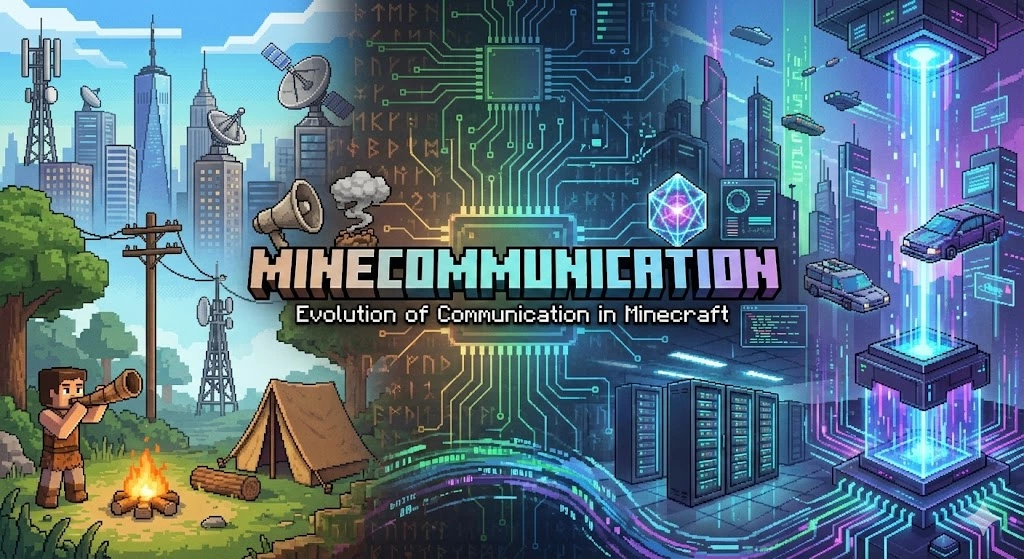
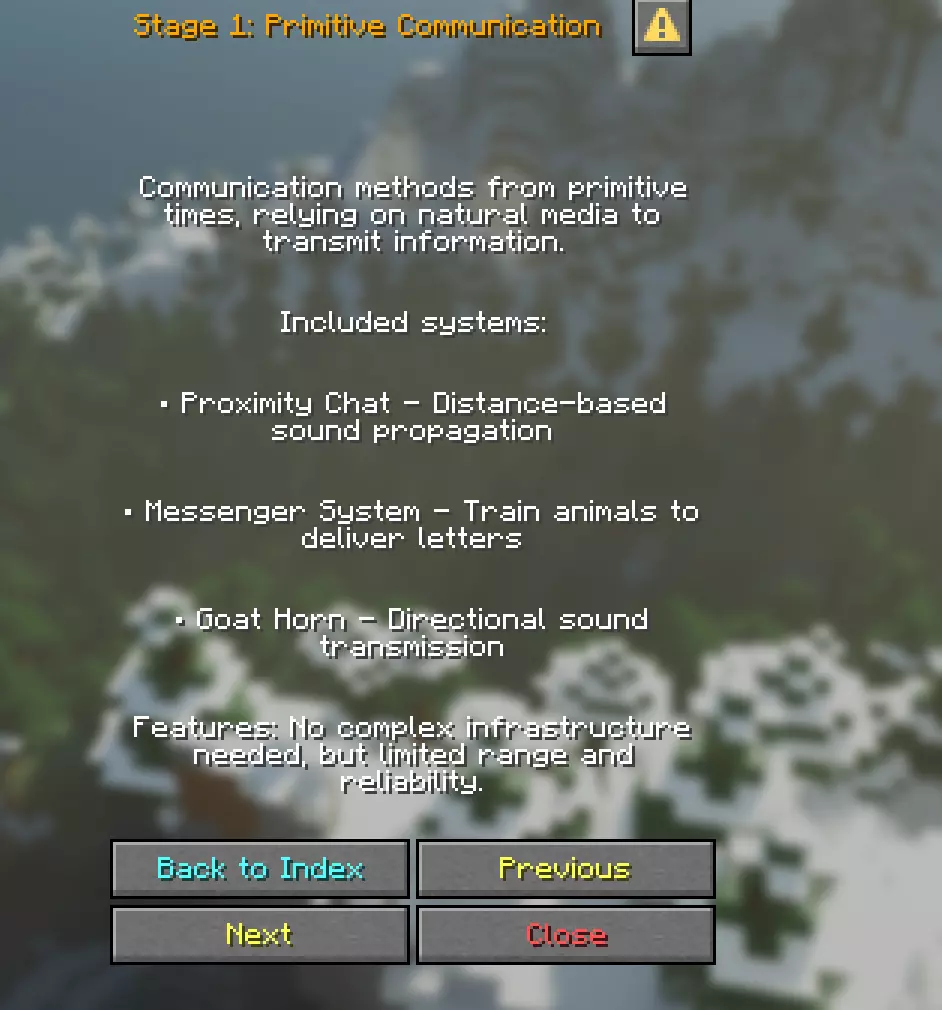
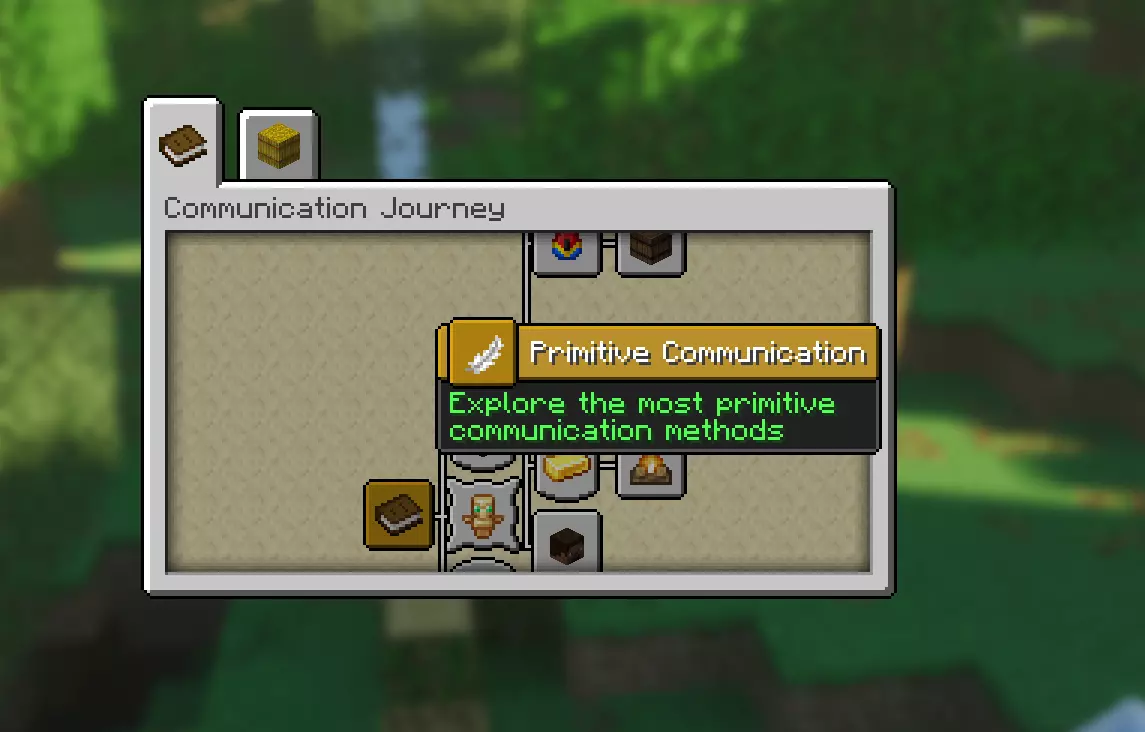
该插件模拟了现实世界的物理规律、网络架构和安全机制,为玩家社区提供前所未有的沉浸感和策略深度。此外,我们还引入了完整的合成机制和进度系统,以及详尽的游戏内手册,帮助玩家理解玩法。
注意:此插件需要 Paper 1.21+ 服务器。不支持 Spigot 服务器。
通信系统概览
MineCommunication 包含 12 种不同的通信系统,分为四个技术时代:
- 原始时代:近距离聊天、邮局、山羊角
- 古代时代:信标、电报、电话
- 现代时代:无线电、广播站、光纤
- 未来时代:基站网络、卫星、量子纠缠
第一阶段:原始通信系统
1. 近距离聊天系统
最基础的通信方式。玩家聊天消息会根据物理距离进行过滤和失真处理,模拟真实的声音波传播。
核心机制:
- 距离限制:只有配置范围内的玩家(默认:50 格)才能接收消息
- 信号衰减:随着距离增加,消息内容逐渐失真
- 传输延迟:消息以可配置的声速传播(默认:343 米/秒)
- 视线遮挡:声音无法穿透实体方块
环境因素:
- 水下:衰减倍率 1.5 倍
- 洞穴环境:衰减倍率 1.2 倍
2. 邮局系统
玩家可以训练动物(如鹦鹉、马等)作为信使,在邮局之间传递书籍,打造中世纪邮政网络体验。
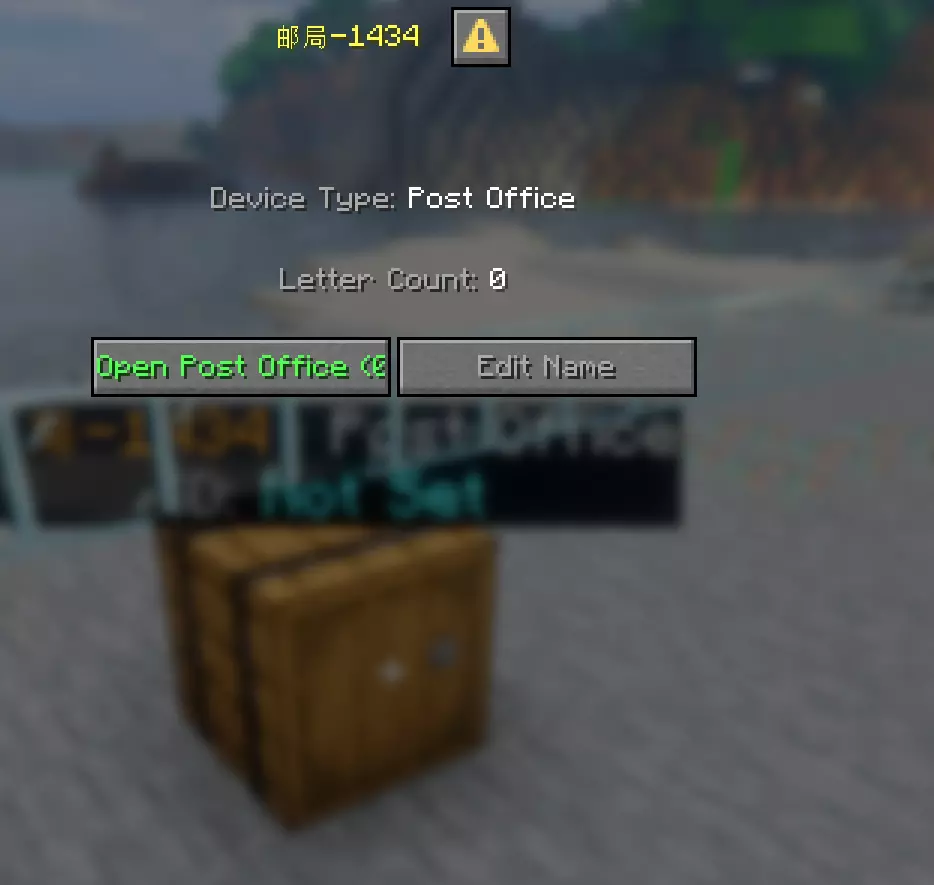
核心机制:
- 动物训练:信使可以训练以提升等级,从而增强:
- 邮局网络:玩家建立邮局作为信息枢纽
- 书籍投递:消息以书籍形式投递,存储在桶容器中
- 等待机制:如果目的地桶已满,信使将等待
- 超时返回:等待 5 分钟后,信使自动返回
风险因素:信使可能会迷路、死亡或被拦截
3. 山羊角定向传输
玩家使用山羊角在锥形区域内发送定向声音消息。只有位于传输区域内的玩家才能接收消息。
核心机制:
- 扇形传播:声音以可配置的锥形范围传播(默认:60° 夹角)
- 方向要求:玩家必须面向目标方向
- 距离限制:最大范围 100 格(可配置)
- 视线遮挡:声波无法穿透实体方块
第二阶段:古代通信系统
4. 信标系统
玩家可以建造信标来远距离传输视觉信号。信号塔之间必须有视线连接,并受天气条件影响。当发送信号时,信标会将火信号中继给可视范围内的其他信标,这些信标可以继续传播信号。
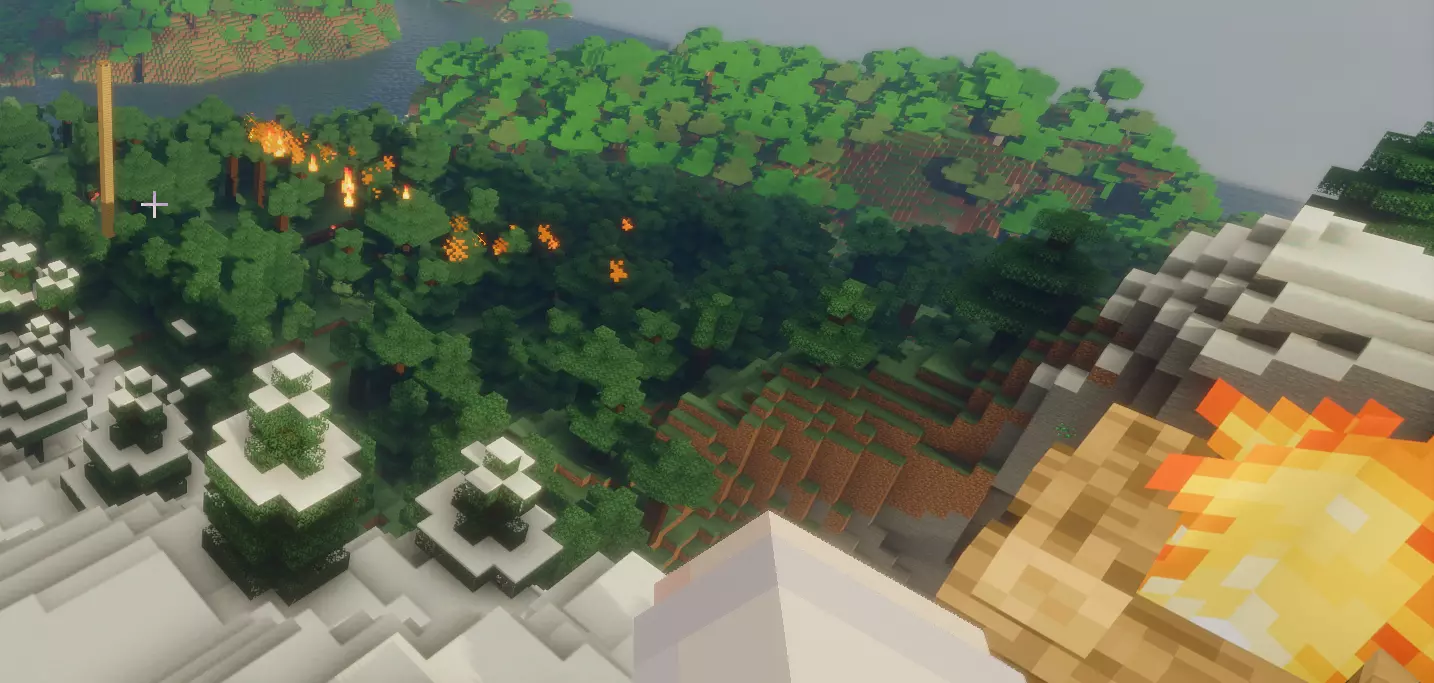
核心机制:
- 视线检测:信号塔必须互相可见才能中继信号
- 高度要求:有效传输的最小高度为 10 格
- 燃料系统:需要燃料(煤炭)维持火焰以接收和发送信标信号
- 中继网络:多个信号塔形成链式网络以扩展传输范围
- 天气影响:雷暴会降低能见度并使信号传输速度降低 70%
5. 电报系统
玩家可以铺设铜缆(铜链或铁链)连接多个电报站,实现类似广播的消息传输。游戏具备真实的信号衰减、消息冲突和调制机制。
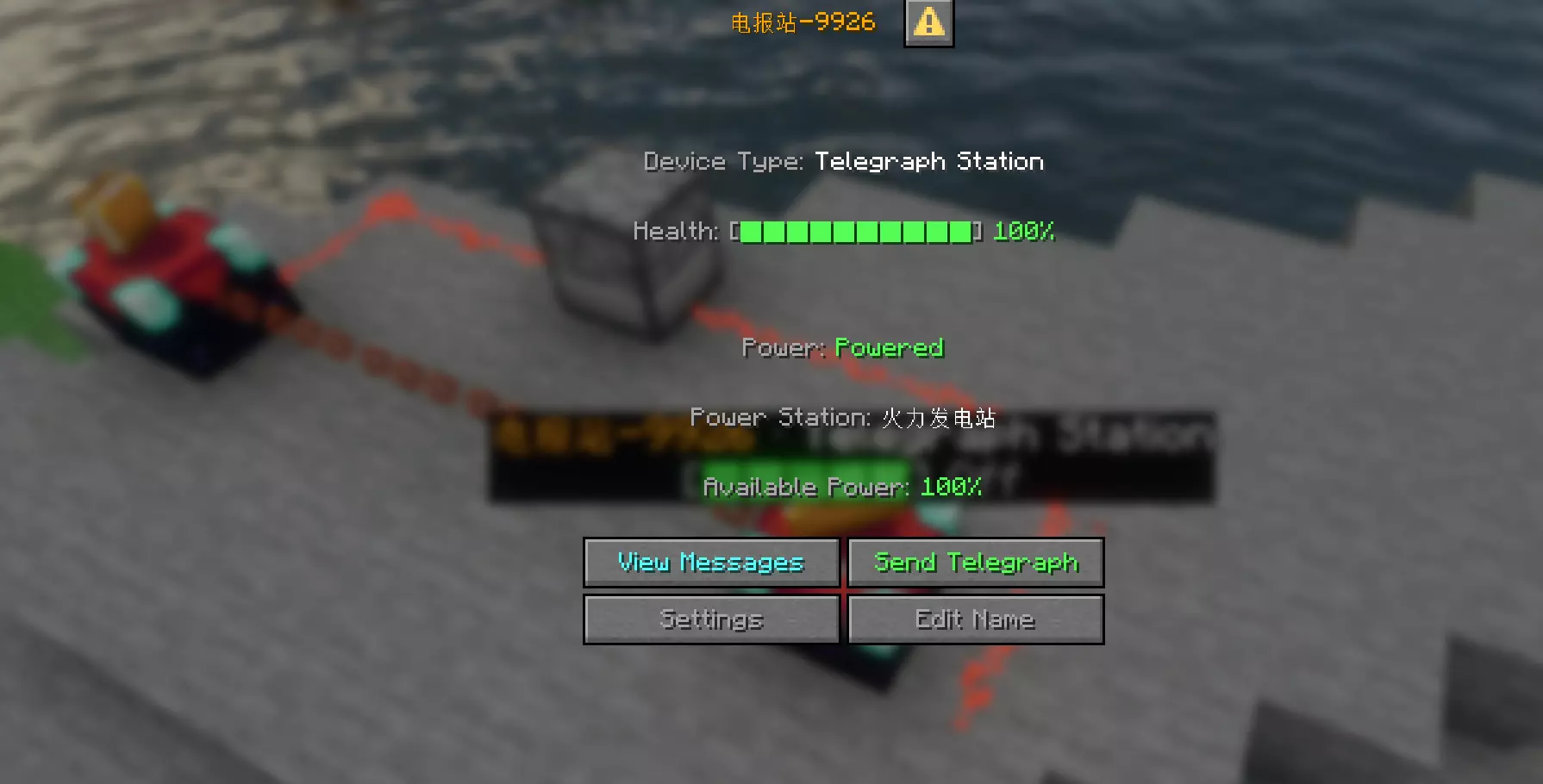
核心机制:
- 电缆网络:铜缆连接电报站
- 信号衰减:每格电缆损失 1% 的信号(可配置)
- 广播模式:网络上的所有站点接收所有消息
- 消息冲突:当电报网络上同时传输多条消息时,可能发生信号冲突
- 电缆老化:铜缆会随时间腐蚀,影响信号质量
6. 电话系统
玩家可以设置电话设备和电话交换机,通过铜缆连接,并通过拨号系统传输消息。电话设备和交换机需要供电。在电话系统网络中,交换机会处理其分配电话号码前缀的电话消息,具有相同前缀的消息必须经过同一网络上的指定交换机。
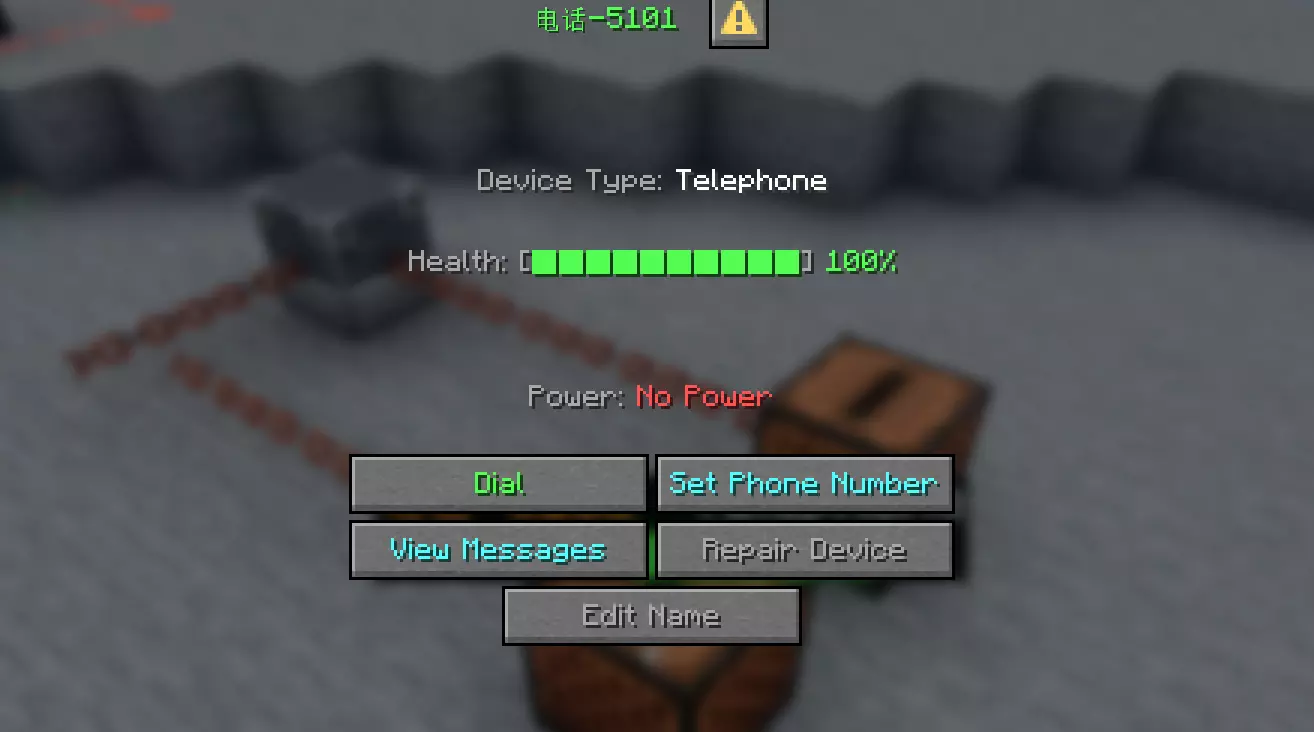
核心机制:
- 唯一电话号码:同一电话网络中的每个设备都拥有唯一的电话号码
- 交换路由:电话交换机管理其配置的电话号码前缀(至少 3 位数字)的所有呼叫请求。交换机还可以连接到具有更长前缀的下级交换机,以实现委托拓扑结构
- 电力需求:设备需要电力才能运行
- 双向通信:电话网络支持双向消息传输
路由路径:电话设备 → 电话交换机 → 有线网络(铜链) → 二级电话交换机(可选) → 电话设备
阶段三:现代通信系统
7. 无线电系统
玩家使用无线电设备进行多频道无线通信。支持多种频段,具有不同的传播特性。
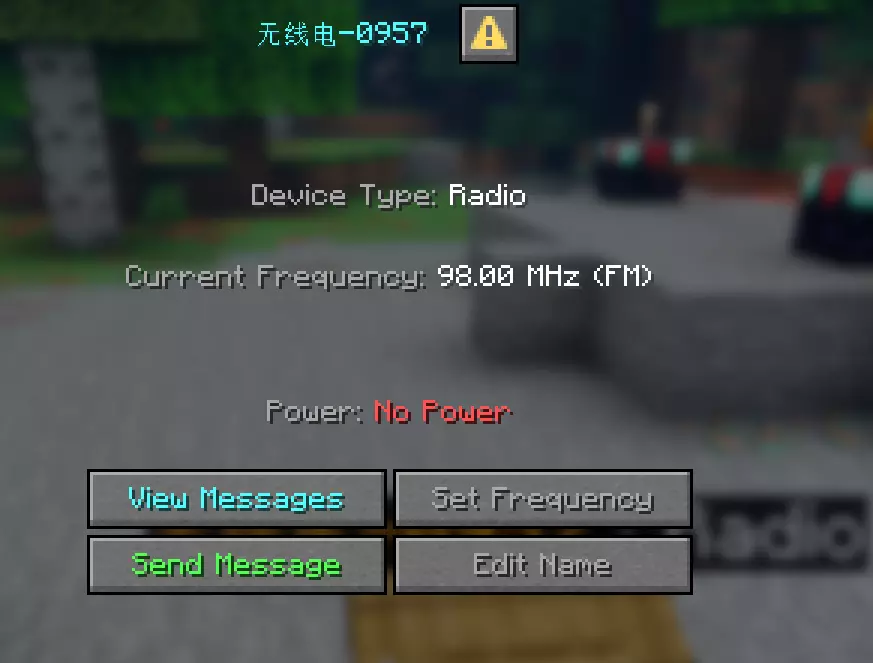
频段:
| 频段名称 |
频率 |
最大传播距离 |
| 长波 (LW) |
0.03-0.3 MHz |
500 米 |
| 中波 (MW) |
0.3-3.0 MHz |
200 米 |
| 短波 (SW) |
3.0-30.0 MHz |
1000 米 |
| FM |
88.0-108.0 MHz |
100 米 |
长波是所有频段中的一个特例。与其他频段直线传输信号不同,长波通过天空(电离层)传播信号,从而有效地避开障碍物。
核心机制:
- 频率管理:每个频道使用特定的频率
- 地形阻挡:山脉和建筑物会减少有效传输距离
- 频率冲突:相邻的频率会导致干扰(额外衰减高达 50%)
- 信号衰减:取决于距离、地形和干扰情况
8. 广播站系统
玩家可以建造广播站进行全向区域广播。覆盖范围内的所有玩家都会直接在聊天窗口中接收消息——无需接收设备。
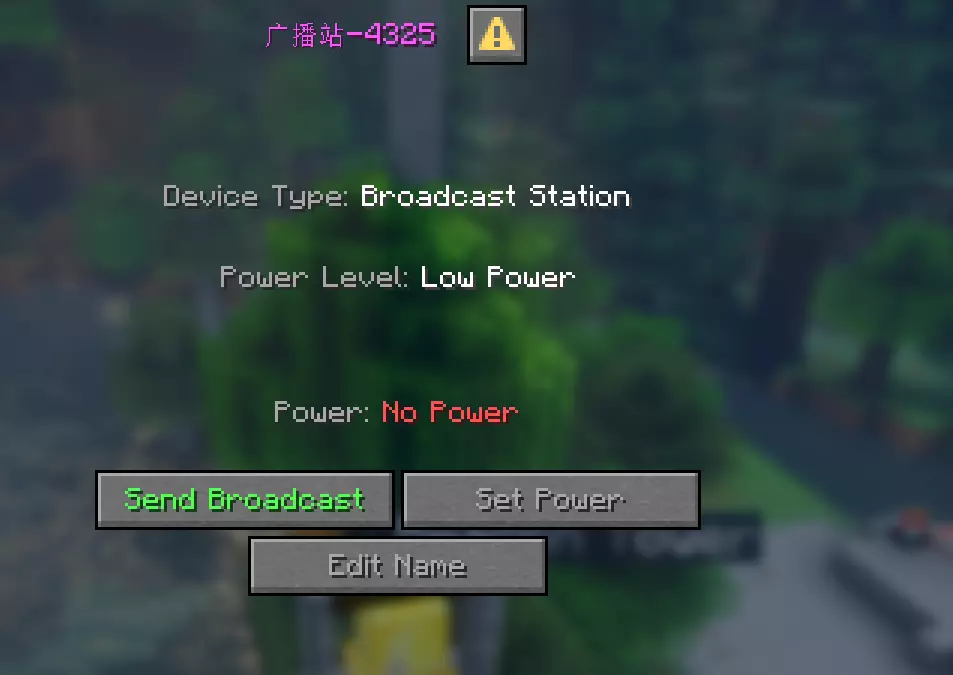
核心机制:
- 单向广播:广播站只能发送广播,不能接收
- 无需接收器:范围内的玩家会自动接收广播
- 高度加成:广播站位置越高,覆盖范围越大
天气影响:
- 晴天:100% 覆盖率
- 雨天:80% 覆盖率
- 雷暴:60% 覆盖率
阶段四:未来通信系统
10. 基站网络系统
玩家可以建造蜂窝基站以支持多种协议(GSM、LTE、5G)的移动通信。需要光纤回传链路,并支持漫游运营商管理。
注意:在基站网络系统中,玩家需要制作“手机”来发送和接收消息,而不是通过基站模块本身。
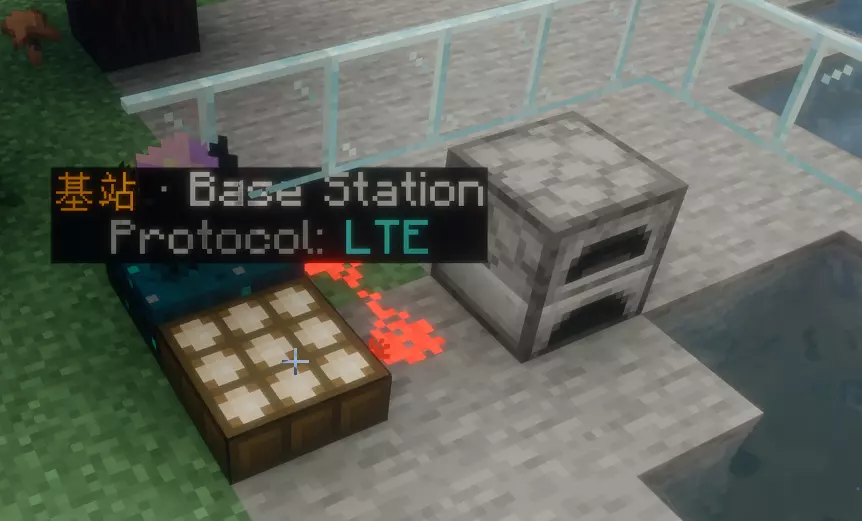
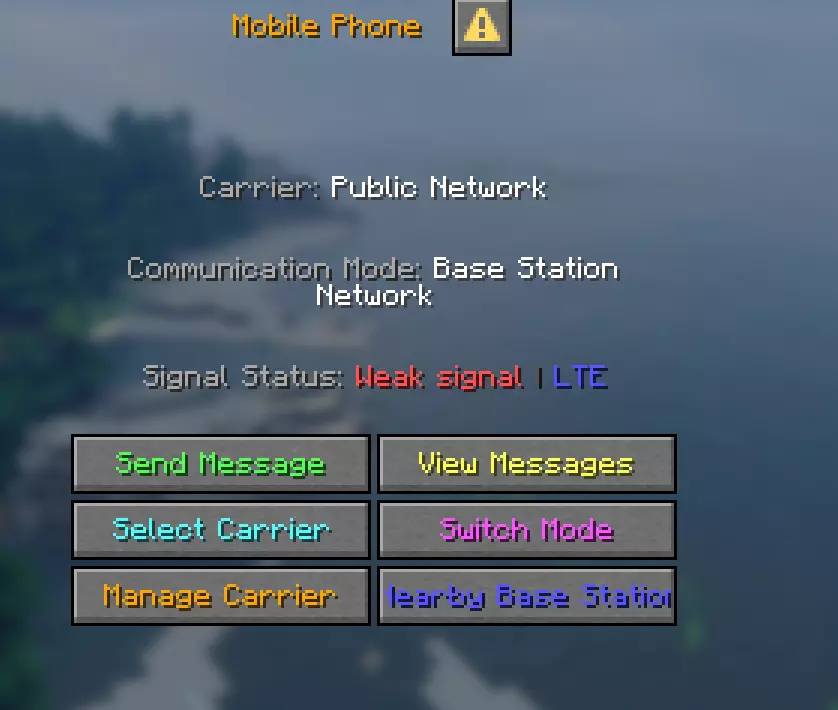
协议规格:
| 协议 |
覆盖距离 |
传播速度(刻) |
| GSM |
100 米 |
40 刻 |
| LTE |
50 米 |
20 刻 |
| 5G |
25 米 |
5 刻 |
基站协议兼容性:
- 相同协议:完全兼容,可以相互传输信号
- GSM 到 LTE:单向兼容(LTE 可以接收 GSM 信号)
- 5G:只能接收来自 5G 基站的信号
核心机制:
- 光纤回传链路:基站必须紧邻光纤交换机
- 运营商系统:玩家可以创建运营商,分配基站,管理订阅
- 漫游协议:运营商可以建立漫游合作伙伴关系以共享基站基础设施
- 手机功能:发送/接收消息、选择运营商、切换通信模式
11. 卫星通信系统
玩家可以发射卫星以实现全球通信。支持不同类型的轨道,并允许实时观察天空中卫星的运动。
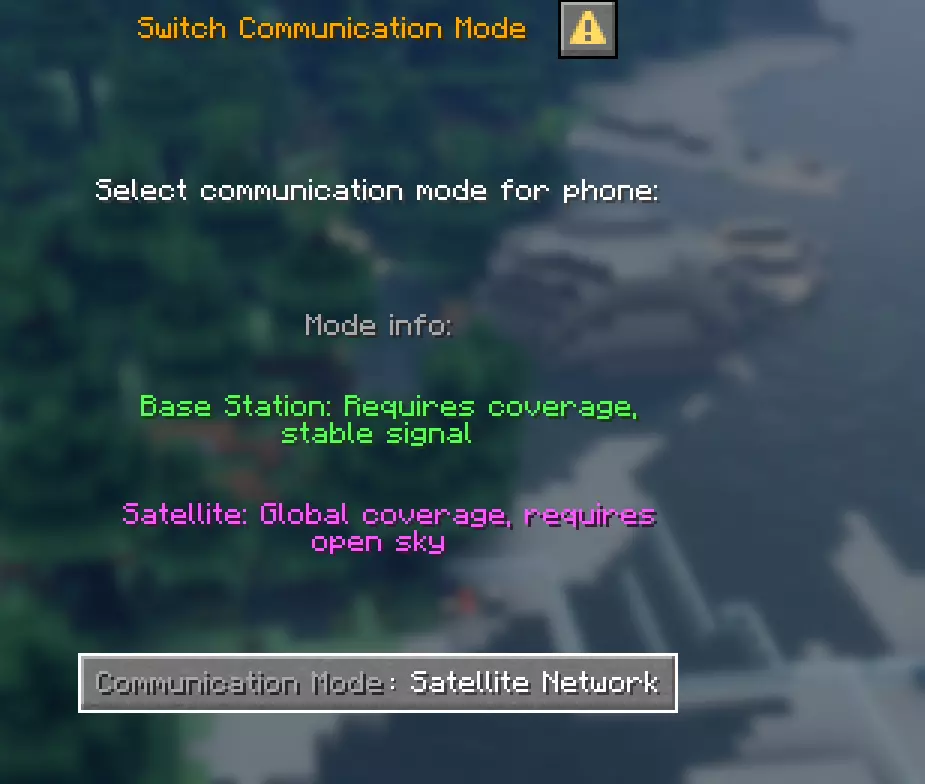
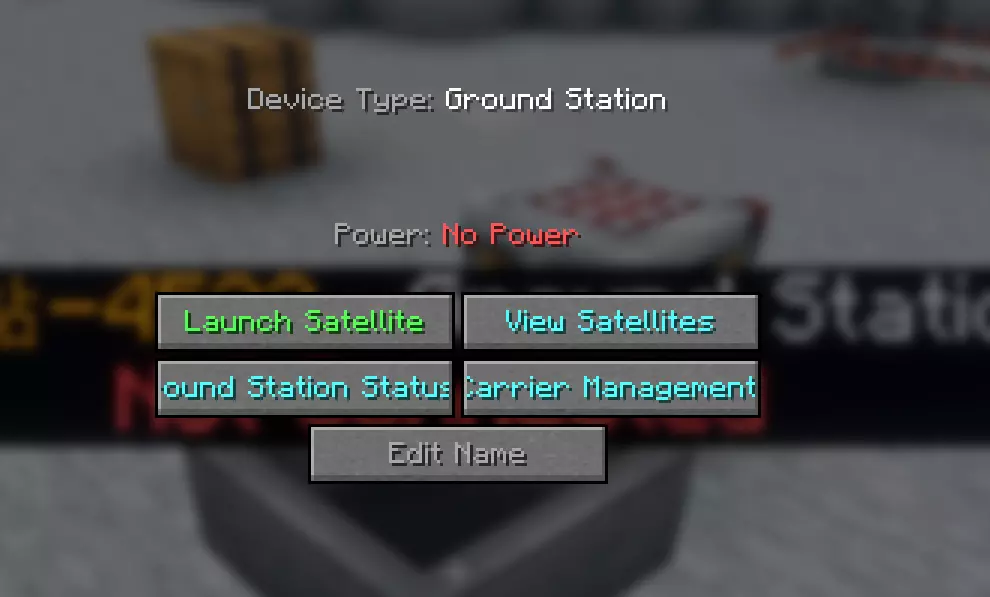

轨道类型:
| 轨道 |
高度 |
服务半径 |
燃料消耗 |
轨道特征 |
| 低地球轨道 (LEO) |
200 格 |
500 格 |
0.001/刻 |
绕地面站运行 |
| 中地球轨道 (MEO) |
500 格 |
800 格 |
0.0005/刻 |
绕地面站运行 |
| 地球静止轨道 (GEO) |
1000 格 |
1200 格 |
0.0002/刻 |
位于地面站上方静止不动 |
核心机制:
- 卫星发射:需要地面站供电
- 动态轨道中心:每颗卫星都围绕其发射的地面站运行
- 燃料管理:20% 时发出警告,5% 时发出危险警告,0% 时发生碰撞
- 地面站要求:必须紧邻光纤交换机,以便通过地面站传输数据
- 星间中继:除了地面站数据传输外,卫星还可以通过星间中继直接相互交换信息
太阳活动影响:
- 低地球轨道 (LEO):通信质量最高降低 50%
- 中地球轨道 (MEO):通信质量最高降低 30%
- 地球静止轨道 (GEO):通信质量最高降低 20%
- 太阳风暴(活动强度高于 90%):延迟增加 50%
12. 量子通信系统
终极通信解决方案。玩家构建量子节点并建立量子纠缠,实现瞬时且绝对安全的通信。这是唯一能够进行跨维度通信(主世界/下界/末地)的系统。
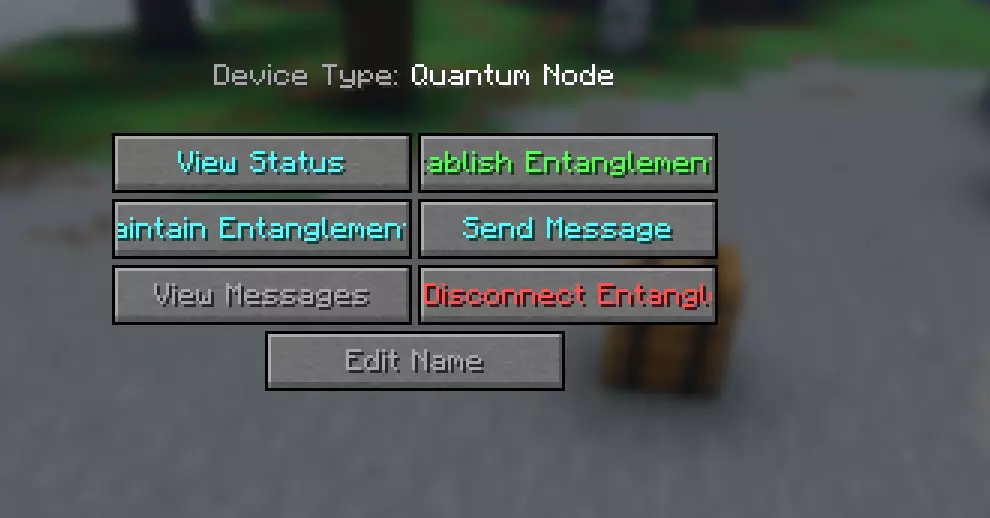
核心机制:
- 跨世界通信:可在主世界、下界和末地之间进行通信
- 即时传输:直接纠缠实现零延迟
量子纠缠健康系统:
| 传输类型 |
生命值损耗 |
| 同世界 |
0.001/刻 |
| 跨世界 |
0.0015/刻 |
当生命值低于 20% 时发出警告。当生命值降至 0% 以下时自动断开连接。
维护机制:
- 材料:1 末影珍珠 + 1 钻石
- 每次维护恢复 25% 生命值
- 冷却时间:5 分钟
电力系统
现代通信系统需要电力才能运行。MineCommunication 目前提供四种发电机制:热能、水力、地热和太阳能。
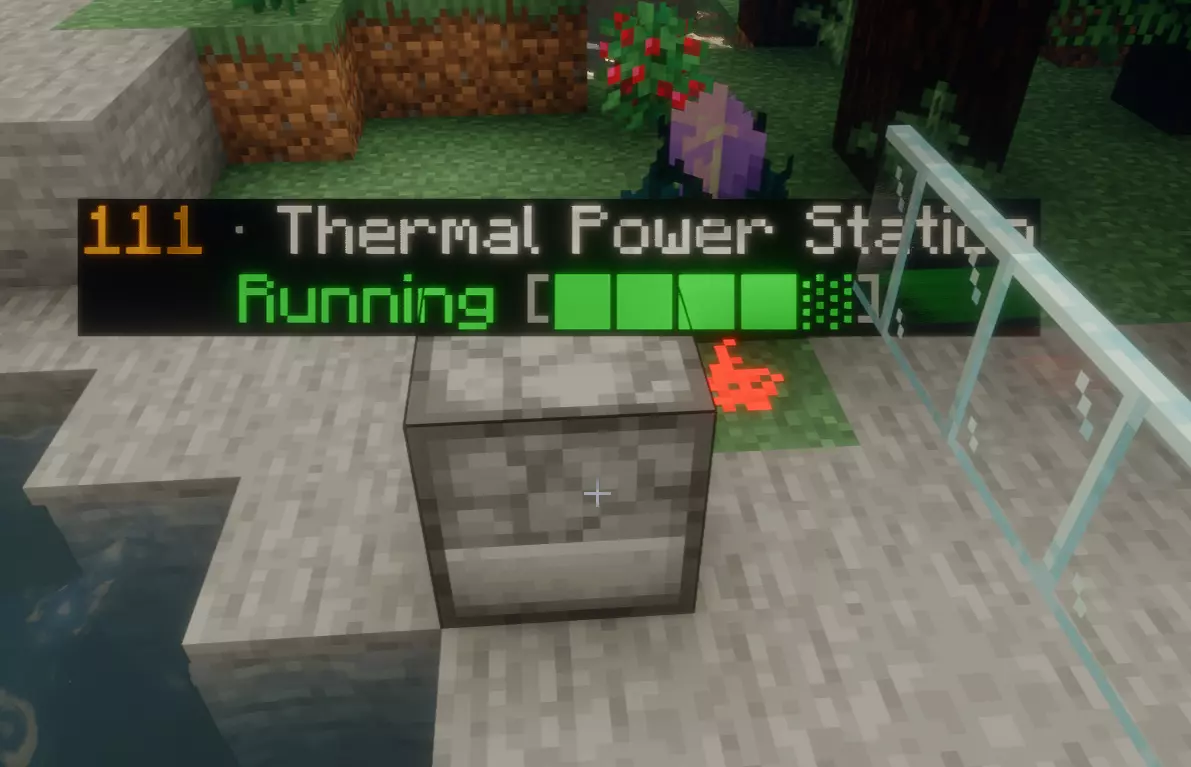
电站类型:
| 类型 |
发电速率 |
描述 |
| 火力电站 |
10.0/刻 |
使用煤炭/木炭燃料发电 |
| 水力电站 |
6.0/刻 |
利用水源高度差发电 |
| 地热电站 |
6.0/刻 |
利用熔岩发电 |
| 太阳能电站 |
3.0/刻 |
白天自动发电,仅在沙漠生物群系中有效 |
电站可以通过红石线路连接到设备。
配置与自定义
- 高度可配置,所有参数/合成配方均可通过
config.yml 进行配置
- 支持热重载
- 每个系统均可单独启用/禁用
命令
玩家命令
| 命令 |
描述 |
/minecomm guide |
打开系统指南 |
/minecomm menu |
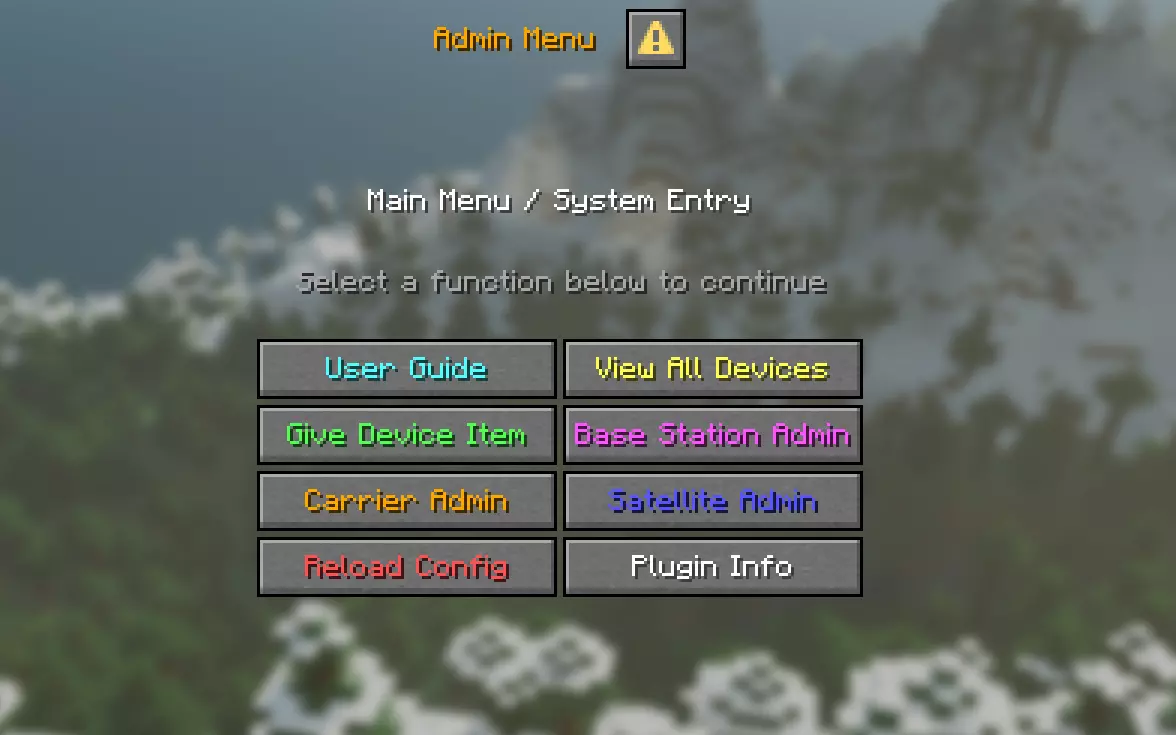
打开主菜单 |
管理员命令
| 命令 |
描述 |
/minecomm give |
给予玩家插件物品 |
/minecomm reload |
重新加载配置 |
常见问题解答 (FAQ)
一般问题
Q:此插件会影响原版聊天吗?
A:当启用近距离聊天时,它会替换原版聊天功能。玩家必须在有效范围内才能通信。您可以禁用此系统以恢复原版聊天。
Q:玩家可以同时使用多个通信系统吗?
A:可以!玩家可以拥有多个系统的设备,并根据需要选择使用哪个系统。
Q:当设备方块被破坏时会发生什么?
A:系统会自动清理所有相关数据,包括网络连接、纠缠和缓存信息。不会掉落任何物品。
技术问题
Q:该插件使用什么数据库?
A:默认情况下使用 H2 数据库,它包含在插件内部。无需设置外部数据库。
游戏玩法问题
Q:我如何为卫星补充燃料?
A:目前,卫星发射后无法补充燃料。请仔细规划您的卫星网络并监控燃料水平。当燃料耗尽时,卫星将坠毁,必须重新发射。
简体中文
MineCommunication
MineCommunication is a revolutionary Minecraft server plugin that brings a complete communication ecosystem to your server. From primitive voice chat to futuristic quantum communication, players can experience the full evolution of communication technology in the game world.
The plugin simulates real-world physics, network architecture, and security mechanisms, providing your server community with unprecedented immersion and strategic depth. In addition, we've introduced a complete crafting mechanism and advancement system, along with a comprehensive in-game manual to help players understand the gameplay.
Note: This plugin requires Paper 1.21+ servers. Spigot servers are not supported.
Communication Systems Overview
MineCommunication contains 12 different communication systems, divided into four technological eras:
- Primitive Era: Proximity Chat, Post Office, Goat Horn
- Ancient Era: Beacon, Telegraph, Telephone
- Modern Era: Radio, Broadcast Station, Fiber Optic
- Future Era: Base Station Network, Satellite, Quantum Entanglement
Stage 1: Primitive Communication Systems
1. Proximity Chat System
The most basic communication method. Player chat messages are filtered and distorted based on physical distance, simulating real sound wave propagation.
Core Mechanics:
- Distance Limit: Messages can only be received by players within a configurable range (default: 50 blocks)
- Signal Attenuation: Message content gradually distorts as distance increases
- Transmission Delay: Messages propagate at a configurable speed of sound (default: 343 m/s)
- Line of Sight: Sound cannot penetrate solid blocks
Environmental Factors:
- Underwater: 1.5x attenuation multiplier
- Cave Environment: 1.2x attenuation multiplier
2. Post Office System
Players can train animals (parrots, horses, etc.) as messengers to deliver books between post offices, creating a medieval postal network experience.
Core Mechanics:
- Animal Training: Messengers can be trained to increase their level, enhancing:
- Movement speed
- Maximum delivery distance
- Cargo capacity
- Reduced chance of getting lost
- Post Office Network: Players establish post offices as information hubs
- Book Delivery: Messages are delivered as books, stored in barrel containers
- Wait Mechanism: If the destination barrel is full, the messenger will wait
- Timeout Return: After 5 minutes of waiting, the messenger automatically returns
Risk Factors: Messengers may get lost, die, or be intercepted
3. Goat Horn Directional Transmission
Players use a goat horn to send directional sound messages within a cone-shaped area. Only players within the transmission area can receive the message.
Core Mechanics:
- Fan-shaped Propagation: Sound propagates in a configurable cone range (default: 60° angle)
- Directional Requirement: Players must face the target direction
- Distance Limit: Maximum range of 100 blocks (configurable)
- Line of Sight: Sound waves cannot penetrate solid blocks
Stage 2: Ancient Communication Systems
4. Beacon System
Players can build beacons to transmit visual signals over long distances. Signal towers must have line-of-sight connection and are affected by weather conditions. When a signal is sent, the beacon will relay the fire signal to other beacons within visible range, which can continue to propagate.
Core Mechanics:
- Line-of-Sight Detection: Signal towers must be mutually visible to relay signals
- Height Requirement: Minimum height of 10 blocks for effective transmission
- Fuel System: Requires fuel (coal) to maintain fire for receiving and sending beacon signals
- Relay Network: Multiple signal towers form a chain network to extend transmission range
- Weather Impact: Thunderstorms reduce visibility and signal transmission speed by 70%
5. Telegraph System
Players can lay copper cables (copper chains or iron chains) to connect multiple telegraph stations for broadcast-style message transmission. The game features realistic signal attenuation, message collision, and modulation mechanisms.
Core Mechanics:
- Cable Network: Copper cables connect telegraph stations
- Signal Attenuation: 1% signal loss per cable block (configurable)
- Broadcast Mode: All stations on the network receive all messages
- Message Collision: Signal collisions may occur when multiple messages are transmitted simultaneously on the telegraph network
- Cable Aging: Copper cables corrode over time, affecting signal quality
6. Telephone System
Players can set up telephone devices and telephone exchanges, connected by copper cables, and transmit messages through a dial system. Telephone devices and exchanges require power. In the telephone system network, the exchange handles phone messages for its assigned phone number prefix, and messages with the same prefix must pass through the designated exchange on the same network.
Core Mechanics:
- Unique Phone Numbers: Each device in the same telephone network has a unique phone number
- Exchange Routing: The telephone exchange manages all call requests for its configured phone number prefix (at least 3 digits). Exchanges can also connect to subordinate exchanges with longer prefixes for delegation topology
- Power Requirement: Devices require power to operate
- Bidirectional Communication: The telephone network supports bidirectional message transmission
Routing Path: Telephone Device → Telephone Exchange → Wired Network (Copper Chain) → Secondary Telephone Exchange (optional) → Telephone Device
Stage 3: Modern Communication Systems
7. Radio System
Players use radio devices for multi-channel wireless communication. Supports multiple frequency bands with different propagation characteristics.
Frequency Bands:
| Band Name |
Frequency |
Max Propagation Distance |
| Long Wave (LW) |
0.03-0.3 MHz |
500 meters |
| Medium Wave (MW) |
0.3-3.0 MHz |
200 meters |
| Short Wave (SW) |
3.0-30.0 MHz |
1000 meters |
| FM |
88.0-108.0 MHz |
100 meters |
Long wave is a special case among all bands. While other bands transmit signals in straight lines, long wave propagates signals through the sky (ionosphere), effectively avoiding obstacles.
Core Mechanics:
- Frequency Management: Each channel uses a specific frequency
- Terrain Blocking: Mountains and buildings reduce effective transmission distance
- Frequency Conflict: Adjacent frequencies cause interference (up to 50% additional attenuation)
- Signal Attenuation: Depends on distance, terrain, and interference
8. Broadcast Station System
Players can build broadcast stations for omnidirectional area broadcasting. All players within the coverage range receive messages directly in their chat window—no receiving equipment needed.
Core Mechanics:
- One-way Broadcast: Stations can only send broadcasts, not receive
- No Receiver Needed: Players within range automatically receive broadcasts
- Height Bonus: The higher the station location, the larger the coverage range
Weather Impact:
- Clear: 100% coverage
- Rain: 80% coverage
- Thunder: 60% coverage
Stage 4: Future Communication Systems
10. Base Station Network System
Players can build cellular base stations for mobile communication supporting multiple protocols (GSM, LTE, 5G). Requires fiber optic backhaul links and supports roaming carrier management.
Note: In the base station network system, players need to craft a "mobile phone" to send and receive messages, not through the base station module itself.
Protocol Specifications:
| Protocol |
Coverage Distance |
Propagation Speed (ticks) |
| GSM |
100 meters |
40 ticks |
| LTE |
50 meters |
20 ticks |
| 5G |
25 meters |
5 ticks |
Base Station Protocol Compatibility:
- Same Protocol: Fully compatible, can transmit signals to each other
- GSM to LTE: One-way compatible (LTE can receive GSM signals)
- 5G: Can only receive signals from 5G base stations
Core Mechanics:
- Fiber Backhaul Link: Base stations must be adjacent to fiber switches
- Carrier System: Players can create carriers, assign base stations, manage subscriptions
- Roaming Agreements: Carriers can establish roaming partnerships to share base station infrastructure
- Mobile Phone Functions: Send/receive messages, select carrier, switch communication mode
11. Satellite Communication System
Players launch satellites for global communication. Supports different orbit types and allows real-time observation of satellite movement in the sky.
Orbit Types:
| Orbit |
Altitude |
Service Radius |
Fuel Consumption |
Orbit Characteristics |
| Low Earth Orbit (LEO) |
200 blocks |
500 blocks |
0.001/tick |
Orbits ground station |
| Medium Earth Orbit (MEO) |
500 blocks |
800 blocks |
0.0005/tick |
Orbits ground station |
| Geostationary Orbit (GEO) |
1000 blocks |
1200 blocks |
0.0002/tick |
Stationary above ground station |
Core Mechanics:
- Satellite Launch: Requires ground station power
- Dynamic Orbit Center: Each satellite orbits its launch ground station
- Fuel Management: Warning at 20%, danger warning at 5%, collision at 0%
- Ground Station Requirement: Must be adjacent to fiber switch to transmit data through ground station
- Inter-Satellite Relay: In addition to ground station data transmission, satellites can directly exchange information with each other via inter-satellite relay
Solar Activity Impact:
- Low Earth Orbit (LEO): Up to 50% communication quality reduction
- Medium Earth Orbit (MEO): Up to 30% communication quality reduction
- Geostationary Orbit (GEO): Up to 20% communication quality reduction
- Solar Storm (activity above 90%): 50% delay increase
12. Quantum Communication System
The ultimate communication solution. Players build quantum nodes and establish quantum entanglement for instantaneous, absolutely secure communication. This is the only system capable of cross-dimension communication (Overworld/Nether/End).
Core Mechanics:
- Cross-World Communication: Can communicate between Overworld, Nether, and End
- Instant Transmission: Direct entanglement achieves zero latency
Quantum Entanglement Health System:
| Transmission Type |
Health Loss |
| Same World |
0.001/tick |
| Cross-World |
0.0015/tick |
Warning when health drops below 20%. Automatic disconnection when health drops below 0%.
Maintenance Mechanism:
- Materials: 1 Ender Pearl + 1 Diamond
- Each maintenance restores 25% health
- Cooldown: 5 minutes
Power System
Modern communication systems require power to operate. MineCommunication currently provides four power generation mechanisms: thermal, hydro, geothermal, and solar.
Power Station Types:
| Type |
Generation Rate |
Description |
| Thermal Power Station |
10.0/tick |
Uses coal/charcoal fuel for power |
| Hydro Power Station |
6.0/tick |
Generates power from water source height difference |
| Geothermal Power Station |
6.0/tick |
Generates power from lava |
| Solar Power Station |
3.0/tick |
Automatically generates power during daytime, only works in desert biomes |
Power stations can be connected to devices via redstone wiring.
Configuration & Customization
- Highly configurable, all parameters/crafting recipes can be configured via
config.yml
- Supports hot-reload
- Each system can be individually enabled/disabled
Commands
Player Commands
| Command |
Description |
/minecomm guide |
Open the system guide |
/minecomm menu |
Open the main menu |
Admin Commands
| Command |
Description |
/minecomm give |
Give a player plugin items |
/minecomm reload |
Reload configuration |
Frequently Asked Questions (FAQ)
General Questions
Q: Will this plugin affect vanilla chat?
A: When proximity chat is enabled, it replaces the vanilla chat functionality. Players must be within effective range to communicate. You can disable this system to restore vanilla chat.
Q: Can players use multiple communication systems simultaneously?
A: Yes! Players can have devices from multiple systems and choose which system to use as needed.
Q: What happens when a device block is destroyed?
A: The system automatically cleans up all related data, including network connections, entanglement, and cached information. No items will drop.
Technical Questions
Q: What database does the plugin use?
A: It uses an H2 database by default, which is included within the plugin. No external database setup is required.
Gameplay Questions
Q: How do I refuel satellites?
A: Currently, satellites cannot be refueled after launch. Please carefully plan your satellite network and monitor fuel levels. When fuel is exhausted, the satellite will crash and must be relaunched.


 插件

 插件
 插件
 插件
 插件
 插件
评论 0
登录后参与评分
还没有评论,来抢沙发吧