PathMax
一款适用于 Iris 的光线追踪体素光影包。
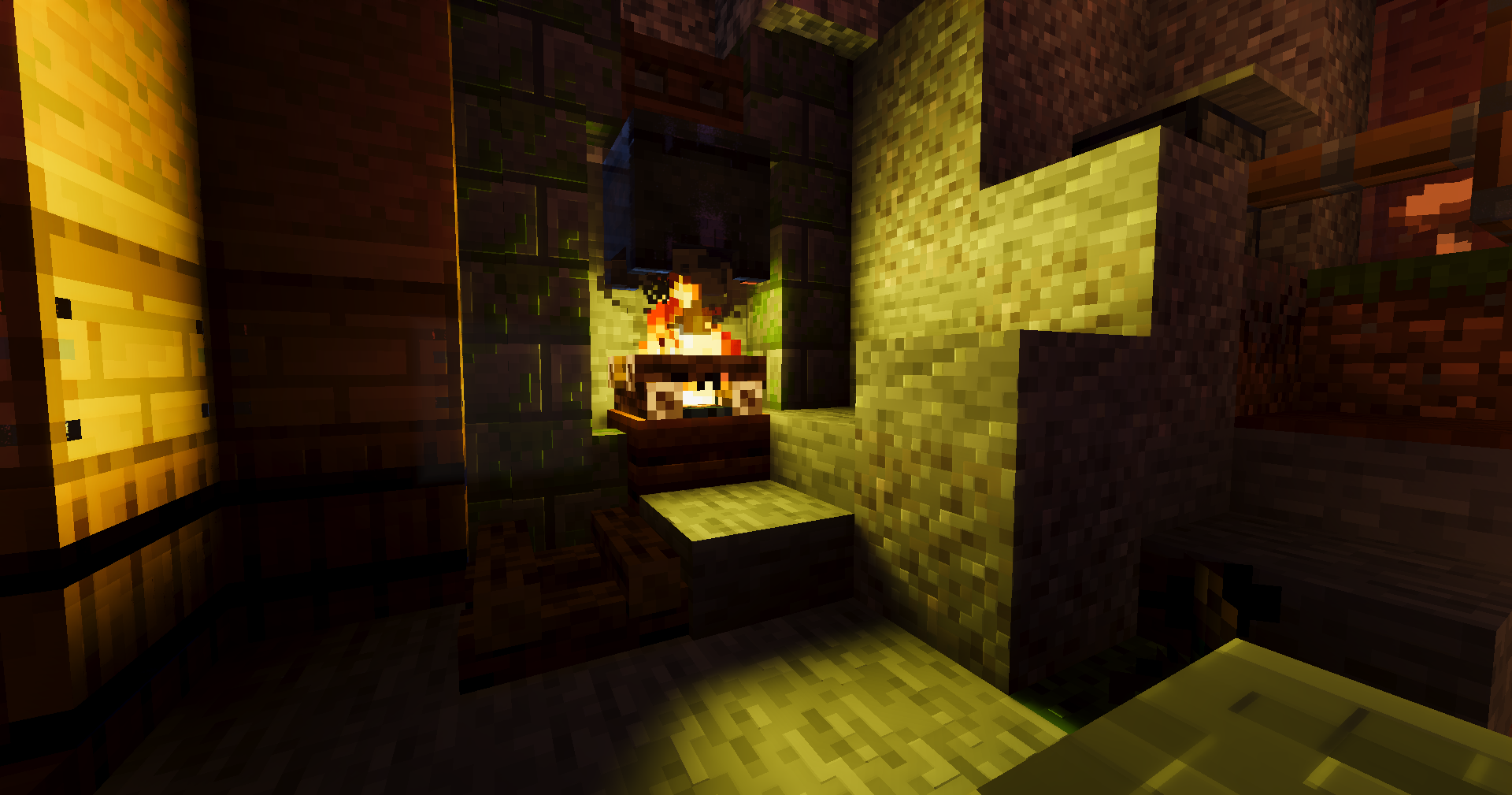
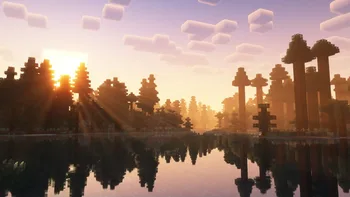
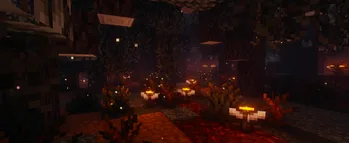
PathMax 通过在每一帧重建的体素副本中追踪光线来照亮世界。火把会从其实际放置的方向照亮房间并投射出真实的阴影。颜色会从反弹的方块上溢出。熔岩湖会照亮其上方的天花板,而地狱中没有太阳,因此那里没有任何光照。
反射采用屏幕空间技术,因此你在水中看到的是渲染完成的最终画面——包含全局光照、自发光、雾效等所有效果——而不是一个由近似算法重新照亮的简化版世界副本。
特性一览
光照
- 屏幕空间去噪的光线追踪全局光照
- 直接从体素网格采样方块光源,每个光源都附带一条阴影射线,因此房间里的两盏灯就是两盏独立的灯,而非合并为一个平均值
- 每次反弹时从阴影贴图读取太阳可见性——精度高于网格,且成本仅为二次步进(march)的八分之一
- 彩色光透过染色玻璃:在地面上、空气中传播,并通过反弹传递,因此玫瑰窗可以染红整个房间
- 自发光表面由纹理驱动,而非基于方块的单一固定值
氛围
- 体积光,可选第二遍渲染,由灯具而非太阳照明
- 体积云,同样会出现在反射中
- 光污染——山丘彼端城镇的光芒矗立于地平线上,最先淹没最微弱的星光
- 基于高度的大气透视,针对真实可视距离数据进行调优
- 程序化生成的恒星,在屏幕上保持固定大小
水体
- 带粗糙度、折射、泡沫和焦散效果的屏幕空间反射
- 水面之上和之下可选的体积效果,根据真实路径长度实现真实的吸收衰减
- 可选波浪与表面细节
材质
- labPBR,为未提供镜面贴图的资源包集成备用方案
- 次表面散射用于植被,由阴影贴图的厚度驱动
- 可选视差遮挡映射
- 实体被体素化,因此生物会投射追踪阴影并出现在反射中
维度
- 重写下界与末地,而非简单着色:没有虚幻的太阳,屋顶下方也没有蓝色渐变,环境光来自有熔岩的地面
- 末地传送门和黑曜石拥有专属处理逻辑
后处理
- 默认使用 AgX 色调映射,并提供 ACES 及其他四种选项
- 自动曝光、泛光、可选 TAA
要求
|
|
| 加载器 |
仅限 Iris。 OptiFine 无法加载此光影包 |
| Minecraft |
1.20.1 – 26.2 |
| GPU |
OpenGL 4.6,兼容模式配置文件 (compatibility profile) |
| macOS |
不支持 —— 最高仅支持 OpenGL 4.1 |
方块形状与材质分类更新至 1.21.4。在此之后添加的方块仍可正常渲染,只是不会获得特殊处理。
设置
十七个界面,每个选项均在工具提示中详细记录——并非简短的一行说明,而是阐述该设置的功能、性能开销以及为何默认值设定于此。
五个预设等级,从土豆到超高级别。它们构成一个连续的阶梯,而非五个互不相关的预设:基础层级已经建立在光线速率、反弹次数和步数限制之上,因此低档位通过放弃体积光、云层和远距离投射来节省性能,而高档位则优先将资源分配给光线追踪。
本光影包自带手工调优的配置,而非预设方案——一种夜间氛围浓厚、光污染严重且体积光强烈的视觉效果。选择 Balanced 即可获取参考设置。
PathMax
A voxel path traced shaderpack for Iris.

PathMax lights the world by tracing rays through a voxel copy of it that is rebuilt every frame. A torch lights the room from the direction it actually sits in and casts a real shadow. Colour bleeds off the block it bounced from. A lava lake lights the ceiling above it, and nothing in the Nether is lit by a sun, because there isn't one.
Reflections are screen-space, so what you see in water is the finished frame — global illumination, emission, fog and all — rather than a simplified copy of the world re-lit by an approximation.
What's in it
Lighting
- Path traced global illumination, denoised in screen space
- Block lights sampled straight out of the voxel grid with a shadow ray each, so two lamps in one room are two lamps and not one average
- Sun visibility read from the shadow map at every bounce — finer than the grid and eight times cheaper than a second march
- Coloured light through stained glass: on the floor, in the air, and carried by the bounce, so a rose window paints the whole room
- Emissive surfaces driven by the texture rather than a flat per-block value
Atmosphere
- Volumetric light, with an optional second pass lit by lamps instead of the sun
- Volumetric clouds that also show up in reflections
- Light pollution — a town over the hill, its glow standing on the horizon and drowning the faintest stars first
- Height-based aerial perspective tuned against real visual-range figures
- Procedural stars, fixed size on screen
Water
- Screen-space reflections with roughness, refraction, foam and caustics
- Optional volumetrics above and below the surface, with real absorption over the real path length
- Optional waves and surface detail
Materials
- labPBR, with an integrated fallback for packs that ship no specular map
- Subsurface scattering for foliage, driven by shadow-map thickness
- Optional parallax occlusion mapping
- Entities voxelised, so mobs cast traced shadows and appear in reflections
Dimensions
- The Nether and the End are rewritten rather than tinted: no phantom sun, no blue gradient on the underside of the roof, ambient arriving from the floor where the lava is
- End portals and obsidian get their own treatment
Post
- AgX tonemapping by default, with ACES and four others available
- Auto exposure, bloom, optional TAA
Requirements
|
|
| Loader |
Iris only. OptiFine will not load this pack |
| Minecraft |
1.20.1 – 26.2 |
| GPU |
OpenGL 4.6, compatibility profile |
| macOS |
Not supported — caps at OpenGL 4.1 |
Block shape and material classification is current to 1.21.4. Blocks added after that still render, they just don't get the special treatment.
Settings
Seventeen screens, every option documented in the tooltip — not one-liners, but what the setting does, what it costs, and why the default is where it is.
Five profiles from Potato to Ultra. They are one ladder, not five unrelated presets: the base already sits on the floor of ray rate, bounces and step count, so the cheap end saves by giving up volumetrics, clouds and reach, and the expensive end spends on rays first.
The pack ships with a hand-tuned configuration rather than a profile — a night-heavy look with heavy light pollution and strong volumetrics. Pick Balanced for the reference settings.
评论 0
登录后参与评分
还没有评论,来抢沙发吧