Realis 光影
Realis 是一款专为 Minecraft Java 1.21.11(Fabric + Iris)打造的写实风格光影包。
核心理念很简单:保持 Minecraft 原有的辨识度——相同的方块、相同的纹理、相同的形状,然后重新构建它们周围的一切。光线来自模拟的大气层,而非平坦的天空颜色。水面会流动、折射并反射。雨水真正改变了世界:地面变暗,水坑形成,水滴沿墙壁流下,天气放晴时一切又逐渐变干。
Realis 并非在原版画面上叠加一层色彩滤镜。它是一个完整的延迟渲染管线,拥有独立的天际线、光照、水面和天气系统,其中所有高负载特效均可关闭或调节。
天际线与大气
天际线是计算生成的,而非绘制而成。Realis 模拟了阳光在空气中的散射效果(瑞利散射、米氏散射和臭氧吸收),因此白昼的色彩由太阳位置决定,而非预设的渐变梯度。
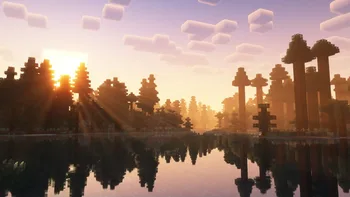
日出、日落和暮色自然呈现:温暖的水平线、冷色调的天顶、长长的金色光线,以及缓慢褪入蓝色黄昏的过程。
体积云。积雨云是真实的体积,拥有平坦的底部和翻滚的顶部。它们被侧面阳光照亮,内部有阴影,当太阳位于云层后方时边缘会发光。高空还有一层薄薄的卷云。下雨前,云层会变厚变暗。
云朵投射出随风漂移在大地上方的阴影。
夜空。两层星空(少数明亮的闪烁星点和众多暗淡的星点)、银河带,以及像球体一样受光的月亮,使其月相看起来正确无误。偶尔会有流星划过天际。
极光。在雪生物群系的晴朗夜晚,头顶会出现绿色、青绿色和紫色的动态光幕,并缓慢变换形状。它们在下方的雪地上投下微弱的绿色光芒。
彩虹。当雨势减弱且太阳角度较低时,太阳对面会出现一道彩虹——外侧还有一道较淡的第二道副虹。
太阳眩光。当你面向太阳时,会出现柔和的光晕、细长的星芒和镜头光斑。当太阳被地形或厚云遮挡时,眩光会消退,且该效果可关闭。
光照
带有可变半影的柔和阴影。物体接触地面的地方阴影锋利,随着距离增加阴影变得柔和,正如真实阳光下的情况。短程屏幕空间接触阴影捕捉到了阴影贴图遗漏的细节。
有色阴影。染色玻璃会为其透过的阳光着色。树冠会透出些许绿光,因此树荫下的阴影不是单调的灰色。
丁达尔效应与光束。阳光穿过树叶、窗户和洞穴口时形成可见的光束,在地面上留下光斑。
环境光遮蔽与全局光照。角落和缝隙被柔和地调暗,光线在近处表面反弹一次——被阳光照亮的墙壁会照亮其旁边的地面,岩浆也会为其周围的洞穴染上色调。
定向天光。面向日落的墙壁被暖光照亮,而相对的墙壁则保持蓝色,而不是每个表面都接收相同的平均天空颜色。
有色方块光源。光线继承其来源的颜色:灵魂火焰是蓝色的,红石是红色的,海晶灯是青色的,岩浆是橙色的,紫水晶是紫色的。普通火把和灯笼保留可调的温暖色温。
自发光方块与手持光源。萤石、灯笼、岩浆、火焰等许多其他方块都会发光并产生泛光效果。手中的火把会照亮你周围的区域。
半透明植被。当太阳位于树叶背后时,树叶和草丛会被照亮。
可读性高的夜晚。月光凉爽且具有方向性,背光面获得柔和的蓝色补光,曝光度自适应——夜晚很暗,但并非漆黑一片。
水面
程序化生成的波浪,具有尖锐的波峰和宽阔的波谷,包含多个不同大小和方向的层级,顶部还有细微的涟漪。水面本身在移动,而不仅仅是纹理在移动。
折射。水面下的物体因波浪而明显位移。
基于深度的颜色。浅水清澈明亮;深水因红光首先被吸收而变为深蓝色。尊重生物群系的水色,其影响程度可调节。
对世界、天空和云朵的反射,并带有菲涅尔效应:垂直向下看时水是透明的,掠射角观察时则如镜面般反射。
太阳和月亮在水波上闪烁。
水陆交界处有水花泡沫。
焦散。波浪将阳光聚焦到底部,形成移动的图案。
水下光线以分离的光束形式到达,颜色随距离衰减,画面略微晃动,小气泡以柱状从水中升起——它们是存在于世界中的实体,而非屏幕上的贴图。
你会扰动水面。涉水或游泳会从身体周围激起环形波纹,游泳的玩家身后会留下 V 形尾迹,就像船只一样。跳入水中会产生溅起的环形水花,并在几秒钟内平息。
雨水与天气
Realis 中的雨水是一个过程,而非一个简单的开关。
逐渐浸润。表面随时间由干变潮,再变湿。多孔材质——泥土、沙子、木头、羊毛——颜色变深并变得更加鲜艳;石头和金属则变得光亮如镜。雨后,一切都会缓慢干燥。
积水在某些地方形成,而在其他地方则没有,边缘柔和,映照出天空和周围环境的倒影,并有雨滴落下形成的涟漪。
溅射痕迹。每一滴落在方块上的水珠都会留下一个小点,随后扩展为短暂存在的环形波纹。
墙壁和窗户上的水滴。水滴沿着方块侧面和玻璃窗向下流淌,留下细长的湿润痕迹,并聚集成水珠。从屋内可以透过窗户观看外面的雨景,而室内保持干燥。
屋檐下的雨水停留在外部。潮湿、积水和滴水仅出现在雨水实际能够落下的区域。
镜头上的水滴。微小的透明液滴带有折射和高光效果,附着在镜头上,部分会向下流淌。它们仅在开阔的天空下出现,并在雨停后几秒钟内消失。
雨本身被重新绘制为不同粗细、受光照影响的细长条纹,随风倾斜。
阴天光线。在雨云之下,太阳不再投射阴影,整个世界由柔和的灰色天光照明。雾气变浓。
雷暴。更暗的云层,以及短暂照亮云层和地表的闪电。
降雪。在雪地生物群系中,降雪缓慢覆盖所有朝向天空的表面——先是单个像素,然后是斑块,最后形成一层封闭的白色覆盖物——之后又会融化消失。
雾
雾是一种真实的介质,由太阳和天空照明,而不是通过距离混合的颜色。
贴地的高度雾,在潮湿的生物群系中更浓
日出前形成的晨雾,在上午消散
夜间薄雾、雨天雾气以及渲染距离边缘的雾气,用于隐藏区块边界
水下、熔岩上方及粉末雪中的雾气
后期处理
从头到尾的高动态范围(HDR)渲染,包含眼睛适应:当你走出洞穴或进入黑暗森林时,曝光度会自动调整。
色调映射:ACES(默认)、Hable 电影感或 Reinhard。
时序抗锯齿(TAA),同时也能清除云层、阴影和反射中的细微噪点。
明亮光源周围的泛光效果、锐化以及微妙的暗角。
熔岩和火焰上方的热浪扭曲效果。
可选的景深效果,支持自动对焦和可选的运动模糊——两者默认关闭。
曝光、对比度和饱和度滑块。
动画
草、花朵、农作物和高大的植物随风摇曳;树叶和藤蔓也是如此。
悬挂的灯笼像钟摆一样摆动。
风暴期间风力增强。阴影与植物同步移动。
其他维度
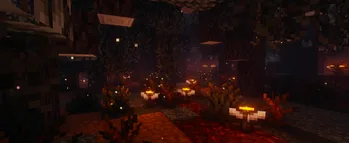
下界:漂浮着与生物群系颜色一致的烟雾,熔岩海上升起炉火般的光芒。
末地:缓慢移动的紫罗兰色与青绿色星云,以及虚空之上的星空。
资源包
Realis 兼容原版纹理以及任何普通资源包。如果你的资源包包含 labPBR 材质贴图,Realis 会使用它们:法线贴图用于表面浮雕,高光贴图用于光泽度、金属性和发光效果。
设置
所有内容均可从光影选项屏幕进行配置(提供英文和俄文界面)。
质量预设:低(LOW)、中(MEDIUM)、高(HIGH)、极高(ULTRA)和极限(EXTREME)。低预设适用于性能较弱的显卡,高预设为默认值,极限预设优先保证图像质量而非帧率。
分类:光照 · 阴影 · 天空与大气 · 云层 · 水体 · 反射 · 雨与天气 · 雾与光柱 · 后期处理 · 植被。
每个重型特效都有独立的开关,大多数特效还配有质量或强度滑块:阴影分辨率与距离、云层质量、波浪高度与速度、反射质量、积水数量、世界变湿和干燥的速度、雾密度、泛光强度等。
如果帧率过低,请尝试以下操作:
选择较低的质量预设。
降低云层质量——云层是最耗性能的单一特效。
降低阴影分辨率和阴影距离。
关闭全局光照,然后关闭体积雾。
要求
Minecraft Java Edition 1.21.11
Fabric 加载器
Iris 和 Sodium —— 基于 Iris 1.10.8 和 Sodium 0.8.14 开发并测试
不支持 OptiFine:该光影包依赖仅由 Iris 提供的功能。
安装
安装 Fabric、Sodium 和 Iris。
将下载的 .zip 文件放入 .minecraft/shaderpacks 文件夹。请勿解压。
在游戏中打开选项 → 视频设置 → 光影包,并选择 Realis。
打开光影包设置以选择质量预设。
已知限制
屏幕空间特效。反射、全局光照和彩色方块光源是基于屏幕上可见的内容计算的。视野外的物体不会被反射(显示的是天空),且光线仅由当前可见的光源着色。
阴影。Iris 仅提供一个阴影贴图。Realis 将细节集中在玩家周围,因此近处阴影清晰,远处阴影较柔和。
折射仅显示水面后的实心方块,不显示其他半透明方块(如玻璃)。
Realis Shaders
Realis is a realism-focused shader pack for Minecraft Java 1.21.11 on Fabric + Iris.
The idea is simple: keep Minecraft recognisable — the same blocks, the same textures, the same shapes — and rebuild everything that happens around them. Light comes from a simulated atmosphere instead of a flat sky colour. Water moves, refracts and reflects. Rain actually changes the world: the ground darkens, puddles form, drops run down the walls, and it all dries again when the weather clears.
Realis is not a set of colour filters on top of the vanilla image. It is a full deferred rendering pipeline with its own sky, lighting, water and weather systems, and every heavy effect in it can be switched off or tuned.
Sky and atmosphere
The sky is computed, not painted. Realis simulates how sunlight scatters in the air (Rayleigh, Mie and ozone), so the colours of the day follow from the position of the sun rather than from a preset gradient.
Sunrise, sunset and twilight come out naturally: a warm horizon, a cool zenith, long golden light, and a slow fade into blue dusk.
Volumetric clouds. Cumulus clouds are real volumes with flat bases and billowing tops. They are lit by the sun from the side, shaded from within, and glow at the edges when the sun is behind them. A thin cirrus layer sits high above. Before rain the cover thickens and darkens.
Clouds cast shadows that drift across the landscape.
Night sky. Two layers of stars (a few bright twinkling ones and many faint ones), the band of the Milky Way, and a moon that is shaded as a sphere, so its phases look right. Shooting stars cross the sky now and then.
Northern lights. On clear nights in snowy biomes, animated curtains of green, teal and violet light appear overhead and slowly change shape. They cast a faint green glow on the snow below.
Rainbow. When the rain eases off and the sun is low, a rainbow appears opposite the sun — with a fainter second bow outside it.
Sun glare. A soft glow, thin star rays and lens ghosts when you look towards the sun. It fades when the sun goes behind terrain or thick cloud, and can be turned off.
Lighting
Soft shadows with variable penumbra. Shadows are sharp where an object touches the ground and soften with distance, as they do in real sunlight. Short screen-space contact shadows catch the small details the shadow map misses.
Coloured shadows. Stained glass tints the sunlight that passes through it. Tree crowns let a little green light through, so the shade under a tree is not flat grey.
Sun flecks and light shafts. Sunlight breaks through leaves, windows and cave mouths as visible beams, and leaves patches of light on the ground.
Ambient occlusion and global illumination. Corners and crevices are softly darkened, and light bounces once off nearby surfaces — a sunlit wall brightens the ground next to it, and lava tints the cave around it.
Directional sky light. A wall facing the sunset is lit warm while the opposite wall stays blue, instead of every surface receiving the same average sky colour.
Coloured block light. Light takes the colour of its source: soul fire is blue, redstone is red, sea lanterns are cyan, lava is orange, amethyst is violet. Ordinary torches and lanterns keep an adjustable warm colour temperature.
Emissive blocks and handheld light. Glowstone, lanterns, lava, fire and many other blocks glow and bloom. A torch in your hand lights the area around you.
Translucent foliage. Leaves and grass light up when the sun is behind them.
Readable nights. Moonlight is cool and directional, shaded sides get a soft blue fill, and the exposure adapts — nights are dark, but not black.
Water
Procedural waves with sharp crests and wide troughs, several layers of different size and direction, plus fine ripples on top. The surface itself moves, not just its texture.
Refraction. Things under the surface are visibly displaced by the waves.
Depth-based colour. Shallow water is clear and light; deep water turns dark blue as red light is absorbed first. Biome water colour is respected and its influence is adjustable.
Reflections of the world, the sky and the clouds, with a Fresnel effect: water is transparent when you look straight down and mirror-like at grazing angles.
Sun and moon glitter on the waves.
Shore foam where water meets land.
Caustics. The waves focus sunlight into moving patterns on the bottom.
Under water the light arrives as separate shafts, colour fades with distance, the image wobbles slightly, and small air bubbles rise in columns through the water — they are in the world, not on your screen.
You disturb the water. Wading or swimming sends rings out from your body, and a swimming player leaves a V-shaped wake behind, the way a boat does. Jumping in makes a splash of rings that settles in a couple of seconds.
Rain and weather
Rain in Realis is a process, not a switch.
Gradual soaking. Surfaces go from dry to damp to wet over time. Porous materials — dirt, sand, wood, wool — darken and gain colour; stone and metal turn glossy. After the rain everything dries slowly.
Puddles form in some places and not in others, with soft edges, reflections of the sky and surroundings, and rings from falling drops.
Splash marks. Every drop that hits a block leaves a small dot that opens into a short-lived ring.
Drops on walls and windows. Drops run down the sides of blocks and down window glass, leaving thin wet trails that break up into beads. From inside a house you can watch the rain on the window while the room stays dry.
Rain under a roof stays outside. Wetness, puddles and drips only appear where rain can actually fall.
Drops on the camera. Small clear droplets with refraction and a highlight settle on the lens, and some run down. They appear only under the open sky and clear within seconds when the rain stops.
Rain itself is redrawn as thin, lit streaks of different sizes that lean with the wind.
Overcast light. Under rain clouds the sun stops casting shadows and the world is lit by soft grey sky light. Fog thickens.
Thunderstorms. Darker clouds, and lightning that briefly lights up the clouds and the landscape.
Snow. In snowy biomes, snowfall slowly dusts everything that faces the sky — first single pixels, then patches, then a closed white layer — and it melts away again afterwards.
Fog
Fog is a real medium that is lit by the sun and the sky, not a colour blended over the distance.
Height fog that hugs the ground, thicker in humid biomes
Morning mist that forms before sunrise and burns off during the morning
Night haze, rain fog, and fog at the edge of the render distance that hides chunk borders
Underwater, lava and powder-snow fog
Post-processing
HDR rendering from start to finish, with eye adaptation: the exposure adjusts when you walk out of a cave or into a dark forest.
Tone mapping: ACES (default), Hable filmic, or Reinhard.
Temporal anti-aliasing, which also cleans up the fine noise of clouds, shadows and reflections.
Bloom around bright light sources, sharpening, a subtle vignette.
Heat haze above lava and fire.
Optional depth of field with autofocus and optional motion blur — both off by default.
Exposure, contrast and saturation sliders.
Animation
Grass, flowers, crops and tall plants sway in the wind; so do leaves and vines.
Hanging lanterns swing like pendulums.
The wind picks up during storms. Shadows move together with the plants.
Other dimensions
The Nether: drifting smoke in the colour of the biome and a furnace glow rising from the lava sea.
The End: a slowly moving violet and teal nebula and a field of stars over the void.
Resource packs
Realis works with vanilla textures and with any ordinary resource pack. If your pack includes labPBR material maps, Realis uses them: normal maps for surface relief, and specular maps for smoothness, metal and glow.
Settings
Everything is configurable from the shader options screen (available in English and Russian).
Quality presets: LOW, MEDIUM, HIGH, ULTRA and EXTREME. LOW is meant for weak graphics cards, HIGH is the default, EXTREME favours image quality over frame rate.
Sections: Lighting · Shadows · Sky and Atmosphere · Clouds · Water · Reflections · Rain and Weather · Fog and Light Shafts · Post Processing · Foliage.
Every heavy effect has its own switch, and most have a quality or strength slider: shadow resolution and distance, cloud quality, wave height and speed, reflection quality, puddle amount, how fast the world gets wet and dries, fog density, bloom strength, and many more.
If the frame rate is too low, try these first:
Pick a lower preset.
Lower Cloud Quality — clouds are the most expensive single effect.
Lower Shadow Resolution and Shadow Distance.
Turn off Global Illumination, then Volumetric Fog.
Requirements
Minecraft Java Edition 1.21.11
Fabric Loader
Iris and Sodium — developed and tested on Iris 1.10.8 with Sodium 0.8.14
OptiFine is not supported: the pack relies on features that only Iris provides.
Installation
Install Fabric, Sodium and Iris.
Put the downloaded .zip file into the .minecraft/shaderpacks folder. Do not unpack it.
In game open Options → Video Settings → Shader Packs and select Realis.
Open Shader Pack Settings to choose a quality preset.
Known limitations
Screen-space effects. Reflections, global illumination and coloured block light are computed from what is on screen. Something outside the view is not reflected (the sky is shown instead), and light is only coloured by sources you can currently see.
Shadows. Iris provides one shadow map. Realis concentrates its detail around the player, so shadows are crisp nearby and softer far away.
Refraction shows only solid blocks behind the water, not other translucent blocks such as glass.


 光影

 光影

 光影

 光影

 光影

 光影

评论 0
登录后参与评分
还没有评论,来抢沙发吧