
一款可配置的天文模组,为游戏添加了包含真实恒星、行星等内容的逼真夜空。本模组适合那些希望在游玩 Minecraft 时探索星空的玩家。
功能特性
- 现实生活中的星座与恒星
- 带有卫星运行的行星
- 逼真的太阳和月亮位置,随季节变化呈现更长的白昼或夜晚
- 流星及年度流星雨
- 星云、星系以及银河系
- 罕见的天文现象,如日食和月食
- “实时模式”,在游戏中显示当前现实世界的天空。
- 使单筒望远镜变得实用
- 完全可自定义,支持添加自定义行星或恒星。
如果您只对替换星空而不需要该模组的其他功能感兴趣,请查看 Astrocraft Lite(适用于 Fabric 和 Neoforge)。
恒星
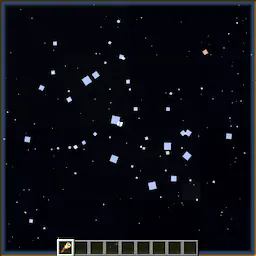
Astrocraft 用现实生活中的恒星替换了 Minecraft 默认的星空。这些恒星保留了原版风格,但色调有所变化,有的偏红,有的偏蓝。你可以在游戏中找到任何星座。在夜间,所有这些恒星都会围绕北极星(Polaris)旋转:
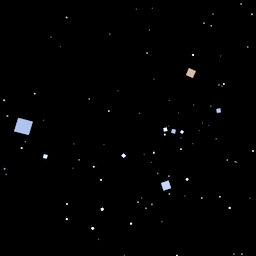
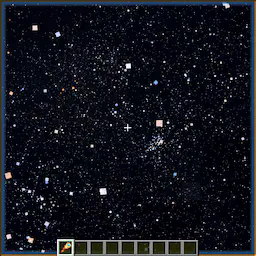
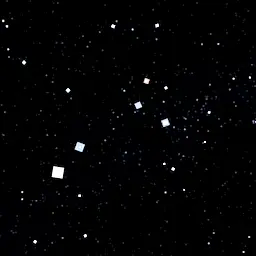
部分恒星是变星,意味着它们的亮度会随时间发生变化。
星系、星云、星团
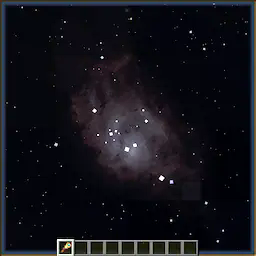
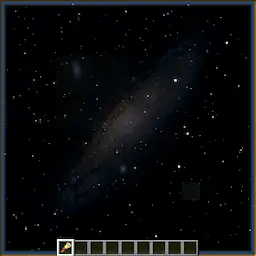
在夜间,可以隐约看到银河系以及其他众多天体。其中包括像仙女座星系(Andromeda)和三角座星系(Triangulum)这样的大型星系,或者像环状星云(Ring Nebula)这样较小的行星状星云。从高山峰顶仰望时,银河系和其他深空天体会变得更亮、更清晰,但当月亮升起时,它们的光芒很容易被掩盖。
流星 / 流星雨
在夜间,你可以偶尔看到光线划过天空。流星通常属于流星雨,多颗流星似乎会从天空中同一点辐射出来。有些则是偶发性的,不与任何特定流星雨相关联。流星雨每年会在可预测的时间出现。例如,英仙座流星雨(Perseids)通常在夏季中期可见,大约在 MC 第 142 天左右。偶尔,某些流星雨甚至会产生“流星暴”。 以下是一些示例流星雨:
| 名称 | 辐射点 | 峰值日期 (/365¼) | 峰值日期 (/96) |
|---|---|---|---|
| Lyrids | Lyra | 33 | 9 |
| Eta Aquariids | Aquarius | 46 | 12 |
| Perseids | Cassiopeia, Perseus | 142 | 37 |
| Orionids | Orion | 211 | 55 |
| Leonids | Leo | 239 | 63 |
| Geminids | Gemini | 266 | 70 |
| Quadrantids | Boötes | 287 | 75 |
单筒望远镜
单筒望远镜是探索 Astrocraft 星空的重要工具,因为它可以让你以更高的细节观察天空的某个区域。它会增加恒星的亮度,并显示出原本太暗而无法看到的物体,如天王星或海王星。
使用单筒望远镜能看到什么取决于多个因素,例如 Y 轴高度或月相。最好爬到山上并向上指来观测像星云这样非常暗淡的天体。
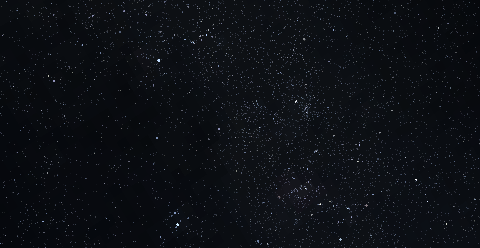
使用鼠标滚轮,你可以放大或缩小至最多 500 倍。
行星 / 太阳系天体
默认情况下,本模组添加了所有主要行星以及太阳系中的许多其他天体。 当未放大时,行星的渲染方式类似于恒星,但通常更亮、更大且颜色更鲜艳。与恒星不同,行星相对于固定的恒星背景移动,随着天数推移穿越黄道带。这些行星在天空中的位置是根据其轨道参数(完全可配置)计算的,同时也考虑了地球自身的轨道。包括:
- 半长轴
- 公转周期
- 离心率
- 倾角
- 进动
行星的亮度或大小通过以下公式计算:
- 直径和反照率
- 到地球/观测行星的距离
- 到太阳的距离
- 相位角(不同行星使用不同的相位曲线模型)
行星的卫星(包括月球)甚至太阳都使用相同的算法。当行星的角直径超过一定大小时,模组会从类星体渲染切换为类似原版月球的渲染。
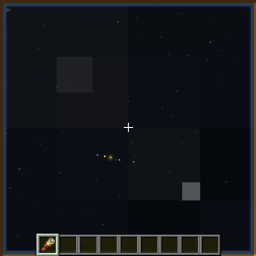
使用单筒望远镜可以看到肉眼无法看到的微弱恒星、行星、小行星或卫星。如果放大足够倍数,行星可以使用纹理渲染,部分行星会像月球一样显示相位(金星和水星)。
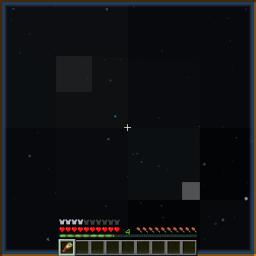
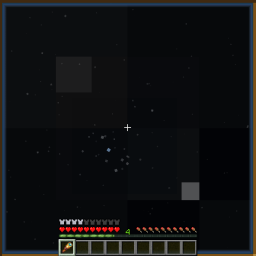

以下是行星(除地球外)的表格,包含它们在游戏中的外观描述:
| 行星 | 亮度 | 游戏内颜色 | 备注 |
|---|---|---|---|
| 水星 | 中等 | 米色 | 日出/日落时可见 |
| 金星 | 非常明亮 | 白色 | 日出前/日落后可见 |
| 火星 | 暗淡-明亮 | 橙色 | 在冲日时明显更亮 |
| 木星 | 明亮 | 黄褐色 | 使用单筒望远镜可以看到四颗卫星 |
| 土星 | 中等 | 黄绿色 | 放大足够倍数时会显示光环 |
| 天王星 | 暗淡 | 青色 | 通常需要单筒望远镜才能看到 |
| 海王星 | 暗淡 | 蓝色 | 需要单筒望远镜才能看到 |
此外还添加了超过 100 颗小行星,包括灶神星 (Vesta) 和谷神星 (Ceres)。它们的外观类似于暗淡的星星。
卫星
木星和土星都有易于观察的卫星。通过单筒望远镜观看,它们看起来像围绕行星旋转的星星。你可以看到卫星在一个夜晚内发生移动,因为它们通常具有较短的公转周期。 你也可以勉强看到火星、天王星和海王星的卫星。
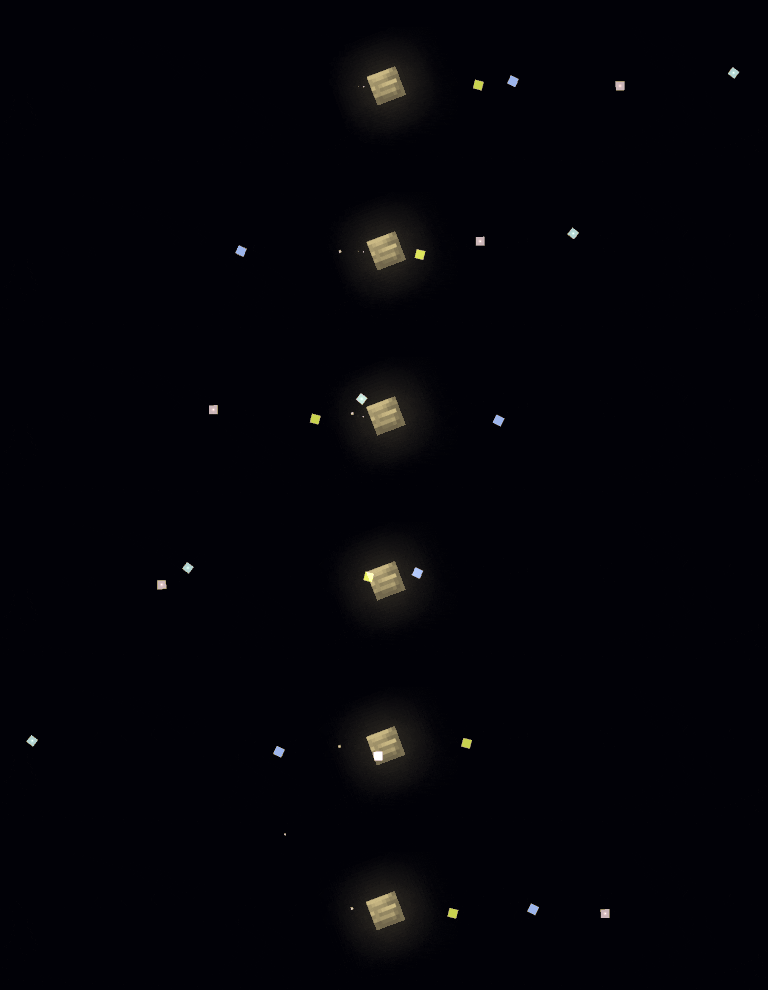
大行星模式
此选项会放大行星,并使用类似 MC 月球的纹理来渲染行星,而不是采用逼真的类星体渲染效果。
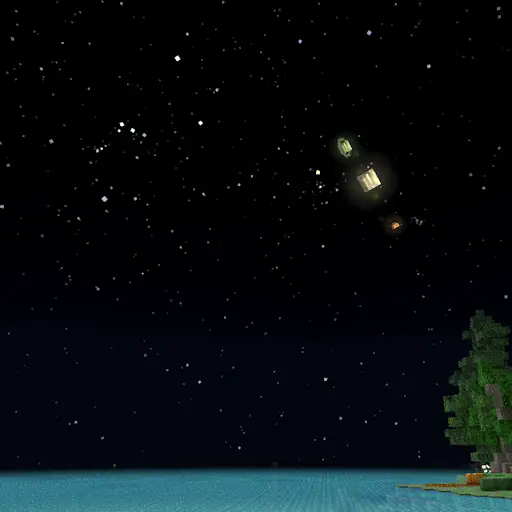
从其他行星看太空
使用“观测位置”选项,你可以轻松地将视角从地球切换到任何其他天体,包括行星、卫星、小行星甚至太阳。这向你展示了从地球以外的其他行星/卫星上看其他行星/卫星的样子(例如从火星看地球,或从欧罗巴看木星)。它还模拟了随着你远离太阳时光照的变化(试试冥王星)。
你还可以切换到附近的其他恒星,例如“比邻星 B”。太阳将作为靠近仙后座的一颗黄色恒星可见。
配置 + 自定义行星
行星是完全可配置的,你可以编辑现有行星甚至添加自己的行星。
| 轨道选项 | - |
|---|---|
| 近日点距离 (AU) | 这是行星距离太阳最近的距离 |
| 远日点距离 (AU) | 这是行星距离太阳最远的距离 |
| 公转周期 (年) | 行星完成一次轨道运行所需的地球年数 |
| 倾角 (度) | 轨道倾斜的角度,以黄道面为基准测量 |
你还可以为每颗行星添加或移除卫星,这些卫星就像行星一样可以进行编辑。 将行星的模型设置为“Star”,它将成为一颗恒星,这样你就可以让太阳系变成双星系统。
下面展示了一个巨大的自定义行星,它在白天也清晰可见:
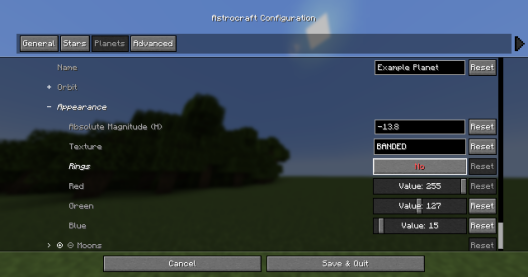
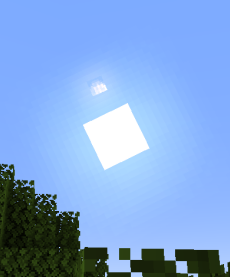
对太阳与月亮的更改
天空中的位置
与原版 Minecraft 中太阳和月亮总是经过头顶不同,它们会根据配置中设置的纬度(默认为北纬 30°)发生倾斜。此外,太阳的路径还会受到其在一年周期中变化(默认 365 个游戏日)的赤纬的影响。在配置文件中禁用“Tilted Sky”设置即可获得原版行为。
在一年的过程中,太阳相对于恒星移动,穿过黄道带。这决定了在特定时间可以看到哪些恒星。
改变昼夜长度
日出/日落的时间也受到太阳赤纬的影响,夏季昼长夜短,冬季则相反。将配置文件中的纬度设置为 90° 或 -90° 可以模拟极地地区的极昼/极夜现象。
月亮
月亮相对于太阳的位置取决于月相。在满月时,月亮位于太阳的正对面,就像在原版 Minecraft 中一样。然而,在新月阶段,月亮会出现在太阳的左侧或右侧,并且可以在白天看到。此模组还增加了月光,在满月期间照亮夜晚。
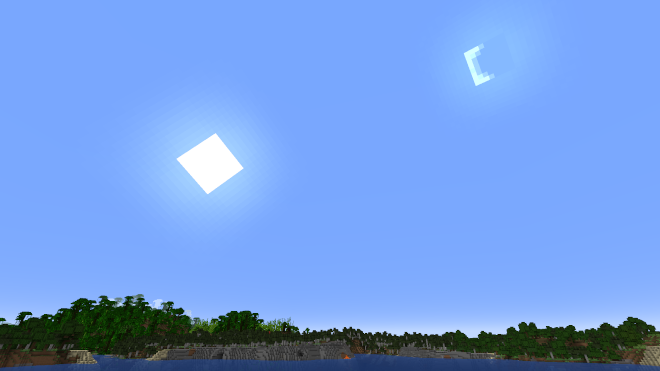
食
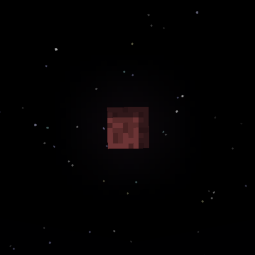
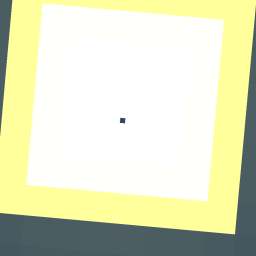
当满月 coincide 且月亮穿过黄道面时,会发生月食,月亮变红且月光变暗。 在新月期间,月亮可以部分或完全遮挡太阳,阻挡阳光并使天空变暗直到如同夜晚一般。其他天文物体,如水星和金星也会遮挡太阳,你可以观察到它们作为小黑点穿越太阳圆盘。
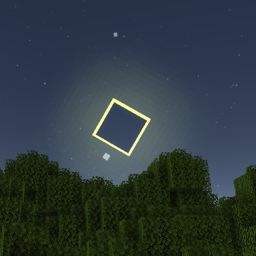
自定义
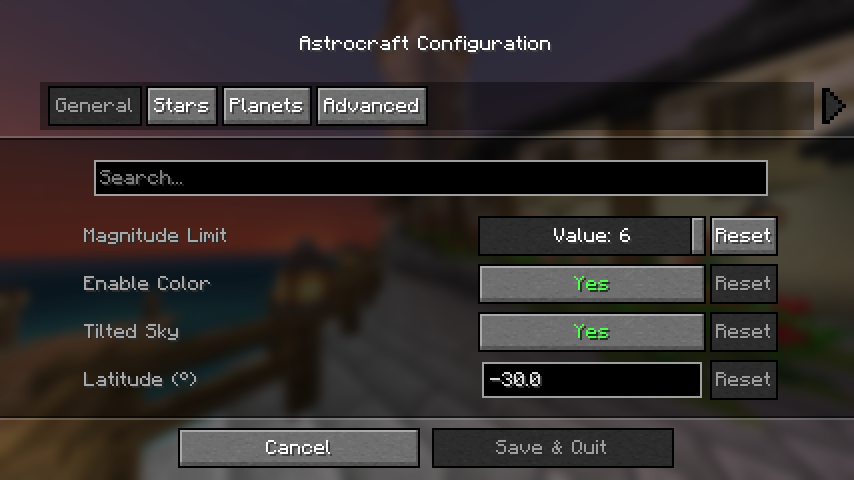
如果你安装了 mod menu,你可以打开配置菜单,否则请编辑配置文件:"config/astrocraft.json"。在这里,你可以关闭星星或行星,减少星星着色,添加你自己的星星和行星,以及更多功能。
星等限制
这是影响性能的主要选项,它决定了显示多少颗星星。将其增加到 6 可以获得更详细的夜空效果。如果遇到性能问题,或者想要模拟城市光污染,请降低该数值。
年份长度
默认的“年份长度”为 365.25 个 Minecraft 天,这也影响了每颗行星/卫星的公转周期。在单人游戏中,这个速度可能对你来说太慢了,因此你可以将其减少到例如 96 天。
多人游戏兼容性
行星和恒星的位置是根据世界时间计算的,因此同一世界中的其他玩家也会看到你看到的相同星空和行星。如果你更改了某些设置(如“年份长度”或“行星”类别中的大多数设置),则不会如此。
覆盖层与星座
在“覆盖层”类别中,你可以启用渲染在天空上的覆盖层。“显示星座”选项通过连接星星之间的线条来帮助你识别星座,并显示构成每个星座的星星。 此外,还有选项可以显示网格或黄道。
实时模式
实时模式使用当前现实生活中的行星位置。它还可以使用现实时间的一天中的时间,但你需要设置经度和纬度才能使用。
地球仪模式
除了固定的经度和纬度外,你还可以让它根据你在 MC 世界中的坐标进行变化。
模组兼容性
Serene Seasons 或 Fabric Seasons
Astrocraft 会自动同步这些模组的配置文件,以确保季节对齐正确。
Serene Seasons 默认配置:
- “年份长度”: 96
Fabric Seasons 默认配置:
- “年份长度”: 112
次要兼容性问题
Enchanced Celestials
血月不会与 Astrocraft 的月食重合,你可能希望禁用 Astrocraft 的月食以避免混淆。
Ad Astra
Astrocraft 的天空不会在其他行星上显示。mynameisjeffitowastaken 制作了一个 模组 来解决这个问题,它还会自动将“观测行星”选项更改为你当前的行星。
光影
可能会出现许多视觉错误,例如重复的太阳和月亮、难看的星星等。
可修复的兼容性问题
如果你使用其他模组,尤其是如果你是整合包创作者,请阅读本节内容。
BadOptimizations
在 config/badoptimizations.txt 的 BadOptimizations 配置文件中,将 enable_sky_angle_caching_in_worldrenderer 设置为 false。
否则,太阳和天空会以奇怪的方向来回移动。
AdditionZ
禁用 AdditionZ 的极星,否则会弄乱天空。
不兼容
这些模组可能无法与 Astrocraft 一起工作或导致崩溃:
- Fabric Skyboxes
- Blinking Stars
Forge
如果你想让它在 Forge 或 NeoForge 上使用,请安装 Sinytra Connector。
如果你遇到任何问题,请联系模组作者 pymsrps,并发布完整的日志。
A configurable astronomy mod that adds a realistic night sky with real life stars, planets and much more. This mod is for those who want to explore the stars while playing minecraft.
Features
- Real life constellations and stars
- Moving planets with moons
- Realistic sun and moon positions, longer days or nights throughout the seasons
- Shooting Stars with annual Meteor Showers
- Nebulae, Galaxies, and the Milky Way
- Rare astronomical events, such as solar and lunar eclipses
- "Live mode" to show the current irl sky in-game.
- Makes the spyglass useful
- Full customizability, with custom planets or stars.
If you are only interested in simply replacing the stars and none of the mod's other features, check out Astrocraft Lite (Fabric and Neoforge).
Stars
Astrocraft replaces Minecraft's default stars with stars from real life. Stars retain their vanilla-style, but with variation in hues, some being more reddish, others blue. You can find any constellation in-game. Through the night, all these stars revolve around the north star (Polaris):
Some stars are variable, meaning they vary in brightness over time.
Galaxies, Nebulae, Clusters
The milky way is faintly visible at night, along with numerous other objects. These include massive galaxies like Andromeda and Triangulum, or smaller planetary nebulae like the Ring Nebula. The Milky Way and other deep-sky objects become brighter and more visible from high mountain peaks, but are easily outshone when the moon is out.
Shooting Stars / Meteor Showers
At night, you can occasionally see streaks of light shoot across the sky. Meteors often belong to a meteor shower, where multiple will appear to radiate from the same point in the sky. Some are sporadic, not associated with any shower. Meteors showers occur at predictable times each year. The Perseids for example, are visible around the middle of summer, around MC day 142. Occasionally, certain meteor showers can even produce "meteor storms". Below are a few example meteor showers:
| Name | Radiant | Peak Day (/365¼) | Peak Day (/96) |
|---|---|---|---|
| Lyrids | Lyra | 33 | 9 |
| Eta Aquariids | Aquarius | 46 | 12 |
| Perseids | Cassiopeia, Perseus | 142 | 37 |
| Orionids | Orion | 211 | 55 |
| Leonids | Leo | 239 | 63 |
| Geminids | Gemini | 266 | 70 |
| Quadrantids | Boötes | 287 | 75 |
Spyglass
The spyglass is an essential tool for exploring Astrocraft's skies, as it lets you observe an area of the sky in much greater detail. It increases the brightness of stars, and shows objects that would otherwise be too dim, like Uranus or Neptune.
What you can see using a spyglass depends on multiple factors, such as Y position or moon phase. It is better to climb a mountain and point upwards to observe very dim objects like nebulae.
Using the mouse scroll wheel, you can zoom in and out up to 500x.
Planets / Solar System Objects
By default, this mod adds all major planets, along with many other objects in the solar system. Planets are rendered similar to stars when not zoomed in, although typically brighter, larger and more vividly colored. Unlike stars, planets move against the fixed background of stars, traversing the zodiac as the days go by.The positions of these planets in the sky are calculated using their orbital parameters (fully configurable), while also taking into account earth's own orbit. These include:
- Semi-Major Axis
- Orbital period
- Eccentricity
- Inclination
- Precession
The brightness or size of a planet is calculated using:
- Diameter and Albedo
- Distance to Earth / Observing Planet
- Distance to the Sun
- Phase Angle (Different phase curve models are used for different planets)
Satellites of planets (including The Moon) or even the Sun use the same algorithm. When the angular diameter of a planet exceeds a certain size, the mod switches from star-like rendering to vanilla-moon-like rendering.
Using a spyglass allows you to see stars, planets, asteroids or moons that are too faint to see with the naked eye. If you zoom in enough, planets can be rendered with a texture, some showing phases like the moon (Venus and Mercury).
Below is a table of the planets (except Earth), with descriptions of their in-game appearances:
| Planet | Brightness | In-game Color | Notes |
|---|---|---|---|
| Mercury | Moderate | Beige | Visible at sunrise / sunset |
| Venus | Very Bright | White | Visible before sunrise / after sunset |
| Mars | Dim-Bright | Orange | Much brighter at opposition |
| Jupiter | Bright | Yellow-Brown | Four moons are visible using a spyglass |
| Saturn | Moderate | Yellow-Green | Shows rings with enough zoom |
| Uranus | Dim | Cyan | Usually requires a spyglass to see |
| Neptune | Dim | Blue | Requires a spyglass to see |
Over 100 asteroids have also been added, including Vesta and Ceres. These appear similar to dim stars.
Moons
Both Jupiter and Saturn have easily observable moons. In a spyglass, they look like stars revolving around the planet. You can see moons move around over a single night, as they often have short orbital periods. You can also see the moons of Mars, Uranus, and Neptune with some difficulty.
Big Planets Mode
This option scales up the planets and renders planets using textures like the MC moon, rather than realistic star-like rendering.
See space from other planets
Using the "Observing Location" option, you can easily switch the perspective from Earth to any other object, including planets, moons, asteroids or even the sun. This shows you how other planets / moons appear from planets other than Earth (like Earth from Mars, or Jupiter from Europa). It also simulates how lighting changes as you get further from the sun (try Pluto).
You can also switch to other nearby stars, for example "Proxima Centauri B". The sun will be visible as a yellow star near Cassiopeia.
Configuration + Custom Planets
Planets are fully configurable, you can edit existing planets or even add your own.
| Orbit Options | - |
|---|---|
| Perihelion Distance (AU) | This is the closest the planet gets to the sun |
| Aphelion Distance (AU) | This is the furthest the planet gets to the sun |
| Orbital Period (years) | How many earth-years it takes for the planet to complete an orbit |
| Inclination (deg) | The angle which the orbit is tilted by, measured from the ecliptic |
You can also add or remove moons to each planet, which are editable just like planets. Setting a planet's model to "Star", will turn it into a star, you can make the solar system a binary stars system this way.
Below shows a custom planet so big that it is visible during the day:
Changes to the Sun & Moon
Positions in the Sky
Unlike in vanilla minecraft, where the sun and moon always pass overhead, they are instead tilted by the latitude set in the configuration (30°N by default). Additionally, the sun's path is also affected by its declination which changes throughout the year cycle (365 ingame days by default). Disable the 'Tilted Sky' setting in the config for vanilla behavior.
Throughout the year, the sun moves relative to the stars, travelling through the zodiac. This determines which stars can be seen at a given time.
Changing Day / Night Lengths
Times of sunrise / sunset are also affected by the sun's declination, with longer days and shorter nights during the summer, and the opposite during the winter. Setting latitude to 90° or -90° in the configuration will simulate the polar day / night experienced at the poles.
The Moon
The moon's position relative to the sun will depend on the moon's phase. At full moon, the moon stays opposite the sun, just like in vanilla minecraft. However, during a crescent phase, the moon will appear just to the left or right of the sun, and can be seen during the day. This mod also adds moonlight, which lights up the night around the full moon.
Eclipses
A lunar eclipse occurs when a full moon coincides with the moon crossing the ecliptic, the moon turns red and moonlight dims. During a new moon, the moon can partially or fully cover the sun, blocking out the sunlight and dimming the sky until it is just like night-time. Other astronomical objects, such as Mercury and Venus also eclipse the sun, which you can observe as a small black spot traversing the sun's disk.
Customization
If you have mod menu installed you can open the configuration menu, otherwise edit the config file at: "config/astrocraft.json".Here you can toggle stars or planets off, reduce star coloring, add your own stars and planets, and much more.
Magnitude Limit
This is the main option affecting performance, it changes how many stars are shown. Increase to 6 for a more detailed night sky. Reduce if you have performance issues, or you want to simulate urban light pollution.
Year Length
Default "Year Length" is 365.25 minecraft days, this also affects the orbital period of every planet / moon. On singleplayer worlds, this may be too slow for you, so you can reduce it to something like 96 days.
Multiplayer Compatibility
Positions of planets and stars are calculated from the world time, therefore other players on the same world will see the same stars and planets as you. This won't be the case if you change certain settings, such as "year length" or most settings in the "Planets" category.
Overlays and Constellations
In the "Overlays" categories, you can enable overlays rendered over the sky. The "Show Constellations" option, helps you see constellations by drawing lines between stars, showing which stars make up each constellation. There are also options to show a grid or the ecliptic.
Live Mode
Live Mode uses the current real-life planet positions. It can also use irl time of day, but you have to set a longitude and latitude to use.
Globe Mode
Instead of fixed longitude and latitude, you can have it change based on your coordinates in the MC world.
Mod Compatibility
Serene or Fabric Seasons
Astrocraft automatically syncs to these mods' config files, so the seasons line up properly.
Default config Serene Seasons:
- "Year Length": 96
Default config Fabric Seasons:
- "Year Length": 112
Minor Compatibility Issues
Enchanced Celestials
Blood moons will not coincide with Astrocraft lunar eclipses, you may want to disable astrocraft eclipses to avoid confusion.
Ad Astra
Astrocraft's skies won't show up on other planets. There is a mod by mynameisjeffitowastaken to fix this, which also automatically changes the Observing Planet option to match your current planet.
Shaders
May have a lot of visual bugs, such as duplicated suns and moons, ugly stars, etc.
Fixable Compatibility Issues
Please read through this section if you use other mods, especially if you are a modpack creator.
BadOptimizations
Set "enable_sky_angle_caching_in_worldrenderer" to "false" in the BadOptimizations config file at "config/badoptimizations.txt" Otherwise, the sun and sky will move back and forth in weird directions.
AdditionZ
Disable AdditionZ's Polar Star, also messes up the sky.
Incompatible
These mods will probably not work or crash with Astrocraft:
- Fabric Skyboxes
- Blinking Stars
Forge
Install Sinytra Connector if you want to it use with forge or neoforge.
If you have any issues, contact the mod author pymsrps, and post the full logs.

下载 Astrocraft
需要联机服务器吗?
稳定流畅、一键部署,几分钟即可和朋友联机开服
最低仅需 8 元/月 即可畅快联机
下载 Astrocraft
下载 Astrocraft
需要联机服务器吗?
稳定流畅、一键部署,几分钟即可和朋友联机开服
最低仅需 8 元/月 即可畅快联机
下载 Astrocraft
需要联机服务器吗?
稳定流畅、一键部署,几分钟即可和朋友联机开服
最低仅需 8 元/月 即可畅快联机
下载 Astrocraft
需要联机服务器吗?
稳定流畅、一键部署,几分钟即可和朋友联机开服
最低仅需 8 元/月 即可畅快联机
下载 Astrocraft
需要联机服务器吗?
稳定流畅、一键部署,几分钟即可和朋友联机开服
最低仅需 8 元/月 即可畅快联机
下载 Astrocraft
下载 Astrocraft
下载 Astrocraft
需要联机服务器吗?
稳定流畅、一键部署,几分钟即可和朋友联机开服
最低仅需 8 元/月 即可畅快联机
下载 Astrocraft
月食阴影
月食的阴影逐渐吞噬月球。此前,月球只会变暗并变为红色。

季节模组兼容性
如果安装了 Serene Seasons 或 Fabric Seasons,Astrocraft 将同步它们的配置,使季节保持一致。
太阳黑子
太阳表面的太阳黑子更小,且成群出现。
叠加层
- 黄道星座的颜色与其他星座不同。
- 添加了银河赤道以及方位角 / 黄道网格。
其他内容
- 使用单筒望远镜放大时降低鼠标灵敏度。
- 新增轴倾角 / 黄赤交角选项。
- 你可以关闭月光。
- 可以使用资源包添加星云或星系等天体。还添加了许多球状星团。
- 恒星以更紧凑的方式存储,减小了模组的文件大小。
修复
- 移除了实时模式下始终卡住的彗星。
- 修复了月食几乎从不发生的问题。
- 修复了光照不受降雨影响的问题。
关于这个资源的讨论、问题反馈与使用心得
还没有讨论,来发第一帖吧
你是这个资源的作者?登录后可认领此资源。
相似资源
 模组

可定制的鞘翅模组,支持装饰纹饰、旗帜图案等更多功能!
 模组

显示你正在注视的方块的信息。(适用于 Minecraft 1.16+ 的 Hwyla/Waila 分支)
 模组
使用 JavaScript 编辑配方、添加自定义物品、编写世界事件!
 模组

查看物品与配方
 模组
在游戏画面角落显示附近世界地形、玩家、生物和实体的地图。可创建路径点,帮助你找到标记过的位置。
 模组
AE2:一款流行的自动化与存储模组
评论 0
登录后参与评分
还没有评论,来抢沙发吧